If you’ve ever flipped through a coin collection or stared at the ones jangling in the bottom of your jacket pocket, you might’ve thought, “Coins are just for buying gum or taking transit.” But if you’re a coin nerd like me—or worse, a supplier who’s spent the last decade hunting for cool, meaningful designs—you know commemorative coins are way more than just shiny metal. They’re tiny, portable time capsules, and some of the most fascinating ones tie directly to art movements. Think about it: Dude, imagine holding a coin that’s not just stamped with a number, but with the exact energy of a group of artists who flipped everything about painting on its head. That’s the kind of stuff I geek out over, and it’s also the kind of thing that makes a commemorative coin not just a novelty, but a piece of culture anyone can own. Commemorative Coins

Let’s start with the obvious one: Impressionism. I mean, come on—Monet’s water lilies, Renoir’s sun-dappled dance scenes, that whole “painting what you feel instead of what you see” thing? It’s perfect for a coin. Let’s be real: The 19th century didn’t exactly treat these guys like rock stars. The Salon, the big art show in Paris, would reject their work for being too loose, too blurry, like they’d just slapped paint on in five minutes. Now? They’re the bread and butter of museums. So when a country puts out an Impressionism-themed commemorative coin, they’re not just copying a Monet—they’re celebrating that whole “stick it to the man” spirit. Last year, we worked on a run of these for a European nation, and let me tell you, the feedback was wild. People who’d never bought a commemorative coin before snapped them up because, hey, they didn’t just want a pretty coin—they wanted to own a little piece of art history that most people only see behind glass. The design was a tiny, curved slice of Monet’s Water Lilies, wrapped around the edge of a silver coin. It’s not a full painting, but you get the vibe, you know? Plus, for the art crowd, it’s a subtle flex—“Yeah, I collect coins, and I get Impressionism.” For the casual collector, it’s a gateway, like, “Wait, who are these guys on my coin? Maybe I should Google them.” That’s the magic, right? Coins make art accessible. You don’t need a $30 ticket to a museum—you just need a pocket.
Next up, let’s talk about Art Nouveau. That movement was all about flowing lines, nature, no straight edges—flowers, vines, ladybugs, that dreamy, almost fantasy stuff. It popped up in the late 1800s, early 1900s, and it spread like wildfire—from jewelry to architecture, even coin design. I remember a Russian commemorative coin we did a few years back for the centennial of Art Nouveau’s big push. Instead of just putting a flower on it, we worked with a designer to weave a lily vine around the coin’s edge, so the vine looks like it’s wrapping the whole thing. Art Nouveau is huge because it’s not just for fine art—it’s decorative, it’s cozy, it’s the kind of thing you could put on a fridge or a keychain. That’s why its commemorative coins do so well. People don’t want a coin that feels like a formal trophy; they want one that feels like something they can actually use and love, something that reminds them of walking through a park and seeing flowers tangled around a lamppost. It’s not just art history—it’s a vibe, and that translates perfectly to metal.
Then there’s Surrealism. Oh, man, Surrealism—Salvador Dalí’s melting clocks, René Magritte’s pipe that’s not a pipe, all that “the subconscious is weird and cool” stuff. Surrealism commemorative coins are my favorite, actually, because they’re the most fun to design. You don’t have to stick to realistic lines. I’ve seen a Surrealism coin that had a tiny melting clock hanging off the edge, and another where Magritte’s floating bowler hat peeks out from behind the coin’s face. The best part about these is that they appeal to both super serious collectors and people who just think Dalí’s clocks are sick. I worked on a limited run of these a couple years ago, and we sold out in like two weeks. Why? Because Surrealism is about breaking rules, and coins—usually super rule-bound, with straight edges, fixed designs—are the perfect place to break those same rules. It’s like, “Hey, coins don’t have to be boring, just like art doesn’t have to be boring.” That’s the kind of story that makes a coin worth more than its metal value. People don’t buy these to melt them down (thank god, because that’s a whole other headache for suppliers). They buy them because they want to own a piece of that weird, wonderful creativity that makes art feel alive.
Wait, can I also mention Street Art? Because that’s a super modern movement that’s blowing up right now, and it’s starting to pop up in commemorative coins too. A few years back, a city in the U.S. did a commemorative coin for its 50th anniversary, and instead of using a classic monument or the founder’s face, they put a tiny stencil of the city’s famous street art owl on it. I was skeptical at first—“A stencil? On a coin? That seems too raw.” But when we got the coins in hand, they were sick. The stencil wasn’t perfect, it had that slightly uneven edge that makes street art street art, and it instantly appealed to a whole new crowd—people who’d never touched a commemorative coin before, but they knew the owl, they’d seen it on walls around town. That’s the thing about art movements, old or new: they reflect the people living in them. Commemorative coins that tie to those movements don’t just celebrate art—they celebrate the people who made it, the way it changed their lives. Impressionism changed how people saw light; Surrealism changed how people saw their dreams; street art here changed how people saw their city. A coin that honors that isn’t just metal—it’s a conversation starter. I’ve had customers tell me they bring these coins to dinner parties, and when they pull out their pocket, everyone asks about it. That’s way better than a plain old coin.
Now, let’s talk about how this works from the supplier side, because you might be wondering—wait, is this just marketing fluff? Nope. Here’s the real tea: when we work on these coins, we don’t just pick a movement and stamp a design. We do research. We talk to art historians, even local artists, to make sure we’re getting the details right. For the Impressionism coin, we made sure the brushstrokes were just right, not too thick, not too thin, like Monet actually painted it. For Art Nouveau, we didn’t just use a random flower—we used a lily that was famous in the city where we were releasing the coin. For Surrealism, we avoided the clichéd melting clock only when it made sense—sometimes clichés are clichés because they’re awesome, right? The key is balancing accuracy with creativity, because the collectors—whether they’re art nerds or casual buyers—can tell if you’re cutting corners. If your coin looks like a cheap sticker, people will know. But if it’s thoughtful, if it feels like it was made to honor the movement, it’ll sell. That’s why we spend months on each design, testing different metals, different finishes—some coins have a matte side to make the art pop, some have a polished edge, some even have a tiny little color added, like a splash of Monet’s blue water lily. It’s not over-the-top, but it’s enough to make you go, “Whoa, that’s cool.”
I also want to call out why this matters beyond just selling coins. Art movements are often seen as something separate, something for galleries and textbooks. But a commemorative coin puts art in your pocket. When you hold a coin with a tiny Magritte bowler hat, you’re not just holding metal—you’re holding a tiny piece of a revolution. Artists back in the day fought to have their work seen, and now their work is in your daily life. That’s the kind of impact we get to be part of as suppliers. It’s not just a transaction—it’s helping connect people to art in a way that’s accessible, that doesn’t require a fancy education or a big budget. You don’t have to know everything about Impressionism to love a coin that reminds you of a sunny afternoon at a museum.
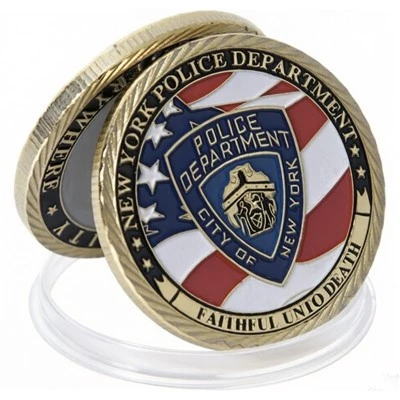
So, if you’re someone who’s looking to add these kinds of meaningful commemorative coins to your collection, or if you’re a business or organization that’s thinking about doing a commemorative run of your own—say, for an art museum anniversary, or a city’s art festival—hit us up. We don’t do generic, boring coins. We do coins that tell a story, that connect people to art, that are actually cool to own. We work with designers, art historians, even community groups to make sure every coin feels authentic, not just a cash grab. Whether you’re a collector looking for a specific Surrealism piece, or you need a custom commemorative line for a gallery’s next show, we can help. Don’t hesitate to reach out to start the conversation about what kind of commemorative coin fits your needs.
Printed Lapel Pins References:
- Museum of Modern Art. (2022). Impressionism: A Revolution in Art. Museum of Modern Art.
- Heller, S. (2018). The History of Art Nouveau. Thames & Hudson.
- Rose, B. (2021). Surrealism: The Subconscious Unleashed. Penguin Random House.
- City Art Project. (2023). Street Art in Modern Commemorative Design. Urban Arts Press.
Yan Hui Gift Craft Co., Limited
As one of the most professional commemorative coins manufacturers and suppliers in China, we’re featured by quality products and good price. Please rest assured to wholesale bulk durable commemorative coins for sale here from our factory. We also accept customized orders.
Address: Dian Hou Zheng Number 8, Kunyang Town, Pingyang County , Wenzhou City, Zhejiang Province, China
E-mail: yanhuicraft@vip.126.com
WebSite: https://www.yanhuigiftcraft.com/
