Hey there, I’m the go-to guy for Chinese Domestic Type (CDT) materials—been in this game for 8 years, supplying to factories that make everything from kitchen goods to industrial hardware, so when folks ask me “are there rules on what we can use for CDT?” I get it, it’s not just a random question. A lot of overseas clients I chat with think China’s factory floor is the wild west when it comes to raw materials, but let me pull back the curtain on the actual restrictions—straight from what I’ve seen, tested, and had to follow every single time I lock in a new supplier or approve a shipment. Chinese Domestic Type
First off, let’s clarify what CDT even means here, because I swear people mix it up with export products all the time. When we talk Domestic Type, that’s stuff made explicitly for the Chinese market, not for shipping out to Europe or the US—though that doesn’t mean it flies under the regulatory radar. The big name you’re gonna hear again and again is GB Standards, short for Guobiao, that’s China’s national set of rules for everything from metal to plastic to chemicals. I don’t just memorize the numbers, I’ve sat through three regulatory webinars last year alone because they keep updating ‘em, and half the time it’s because of new health scares or environmental messes in factories.
Let’s start with the most common material people ask about: plastics. Almost every CDT product uses plastic of some sort—packaging, tool handles, even kids’ toys. The main restriction here is what’s called GB 4806, that’s the food safety rule for plastics if it’s gonna touch food, but wait, there’s other GBs for industrial plastics too. For example, if you’re making a plastic bucket for construction, you can’t use recycled plastic that’s been contaminated with toxic chemicals. Wait, no—actually, in some cases recycled is allowed, but only if it’s post-industrial scrap, not post-consumer waste that’s been sitting in a landfill (think old water bottles that might have had pesticides or something). I had a supplier try to slip in post-consumer HDPE for a rice bin last year, and we had to reject the entire 20-ton shipment—GB 4806.7 strictly bans post-consumer plastic for food contact, and if you get caught with that, not only does the factory get fined, our whole supply chain gets flagged. No thanks.
Another plastic rule: phthalates. You know those softeners that make plastic bendy? For kids’ products (CDT toys, high chairs, even play mats), GB 6675 says you can’t have more than 0.1% of certain phthalates—like DEHP, DBP, BBP, the usual suspects. I’ve had to send 5 different samples to third-party labs in Guangdong this year alone because clients kept switching up their toy designs, and every time the lab’s got to show the phthalate levels. There’s also limits on lead and cadmium in plastics, same as most places, but the numbers are sometimes tighter than EU REACH? Wait no, actually, for some small parts, CDT rules are a bit more lenient? No, wait, let me check—no, the basic heavy metal limits for general plastics are aligned with global standards, but where CDT is stricter is on what’s allowed as an additive. Like, some older plasticizers that were okay 10 years ago? They’re gone now, banned under a 2021 update to GB 9685, which is the big one for plastic additives. My team has a spreadsheet that tracks every banned additive—last year we crossed off 12 old ones, and that meant switching 3 suppliers for our PVC film line. No way we can cut corners here.
Next, metals, because CDT isn’t just plastic. If you’re making steel pipes, aluminum parts, even copper wiring for household appliances, there’s GB standards here too. The biggest one I deal with is GB 18145 for galvanized steel, used for things like water pipes and metal fence posts. You can’t have too much lead in the zinc coating—if the lead leaches into water (or soil, for fence posts), that’s a no-go. I had a steel mill in Shandong quote me a super cheap batch last quarter, turned out their zinc had 0.3% lead instead of the allowed 0.05%—we passed on it, even though the price was 15% lower, because if we used that, our clients in the agricultural sector would have had their harvest equipment failing inspections, and we’d be the ones on the hook. Also, for non-ferrous metals, like aluminum cookware, GB 4806.9 limits heavy metal leaching when heated—so no cheap scrap aluminum that might have mercury or arsenic. Lab tests on that stuff are non-negotiable for every batch.
Then there’s industrial chemicals and coatings, which I bet surprises a lot of people. CDT products like paint, metal coatings, even fabric for furniture have their own rules. GB 18583 is for adhesives, right? It says you can’t have more than 10g/L of volatile organic compounds (VOCs)—those are the fumes that cause headaches, and long-term exposure is bad. I used to work with a small chemical supplier in Zhejiang that kept delivering adhesives with 12g/L VOCs—they said it was “just a little over,” but we had to drop ‘em. Because when a factory uses that adhesive, their workers might get sick, plus the final product would smell bad, and Chinese consumers don’t buy stuff that reeks. Also, for wood coatings, GB 18581 has strict limits on formaldehyde—same as US CARB standards, actually, so it’s not like they’re making up random rules. I get that overseas folks might think Chinese regulations are vague, but the actual test methods are pretty specific—we send samples to CNAS-accredited labs, same kind you’d use in Germany or the US, so the results are concrete.
Wait, what about stuff that’s not for food or kids? Like industrial parts, maybe machinery components for factories? Do those have fewer restrictions? Nope, even CDT for industrial use has environmental rules. The Ministry of Ecology and Environment updated a rule in 2022 called the “Restriction of Hazardous Substances in Electrical and Electronic Products” (that’s China’s version of RoHS) and it applies to all CDT electronics, even the cheap power tools sold to small workshops. So no lead in solder, no mercury in switches, same as EU RoHS. I had a client that made small welding machines for the domestic market, they tried to use a cheaper solder with lead, and we had to work with them to source lead-free solder from a supplier in Jiangsu. It cost them a bit more, but they didn’t get their product pulled from shelves in Guangzhou last year.
Here’s the thing I wish more people got: these restrictions aren’t just red tape. A lot of them came from real problems. Like, back in 2008, there was the melamine milk scandal, which led to super strict GB rules on food contact materials—you can’t have any melamine leaching into food or liquid now, even in tiny amounts. That’s why I make sure every plastic part for food products gets tested for melamine, and we keep all the test reports on file for at least 3 years, in case regulators ask. No exceptions.
But wait, is there any wiggle room? Sure, but it’s not the kind of wiggle room people think. Like, some small-scale workshops might bend the rules, but as a legitimate CDT supplier, I don’t work with those guys. I’ve invested in a quality control team of 5 people who check every raw material before it even hits the production line. We do incoming inspections, not just final tests, because by then it’s too late. Last month, we got a batch of polypropylene (PP) pellets from a supplier, and our QC team noticed the color was off—sent it to the lab, turned out it had extra calcium carbonate that exceeded the allowed limit for food-grade PP. We sent it right back, no questions asked. That saved us from a huge headache later.
Another thing: labeling. For CDT, if a material is food contact, you have to label it clearly in Chinese (duh, it’s domestic market) that it’s safe for food use. No vague terms like “safe plastic.” I’ve had clients come to me from abroad thinking they can slap an English label on a CDT product, but that’s a non-starter. The Chinese authorities crack down hard on false labeling—if a product says “food safe” but isn’t, it gets removed from shelves, and the supplier faces fines. So we make sure all our materials and final products have the correct Chinese labeling, plus we can provide test reports in English if our overseas clients want them, since a lot of importers are looking for CDT materials for their own domestic production now too.
Wait, let’s address a common myth: a lot of people think Chinese domestic materials are lower quality because of less strict rules, but that’s just not true for the regulated stuff. The GB standards are often adopted from ISO or other international standards, so a food-grade PP pellet for CDT is the same as one made for export to the US, just with different labeling and packaging. The only real difference is that for CDT, we don’t have to meet EU REACH’s extra 10+ SVHC substances, but wait—no, actually, some of those SVHCs are banned in CDT too under GB 9685. So it’s not like there’s a separate rule that allows more toxic stuff for domestic. The only thing that’s different is the scope of some regulations, but the core restrictions on raw materials are pretty aligned with global safety norms.
I also want to mention that if you’re a buyer looking for CDT materials, the key is to work with suppliers who have a track record of compliance. Don’t just go for the cheapest quote—because that’s where the cutting corners happen. For example, a client of mine that imports CDT construction materials told me they once got a bad batch of steel from a supplier that skipped lead testing, and when they sold it to a customer, it failed a local soil test in Canada (wait, no, their customer was selling to Canadian market) so they had to recall 500 units. That cost them way more than paying a little extra for compliant materials.
So, to wrap up: yes, there are very specific restrictions on raw materials for Chinese Domestic Type products, all tied to national GB standards, updated regularly, and enforced by regulatory bodies. The rules cover everything from heavy metals in plastics and metals to VOCs in coatings to food safety. As a CDT supplier, I don’t cut corners on this—because one bad batch can ruin my reputation, and hurt my clients. If you’re looking for reliable CDT raw materials that meet all these requirements, don’t hesitate to reach out to my team to talk through your needs, whether you’re making kitchen goods, electronics, construction parts, or anything else that uses CDT materials. We can provide test reports, source specific materials, and make sure everything is fully compliant with Chinese domestic regulations.
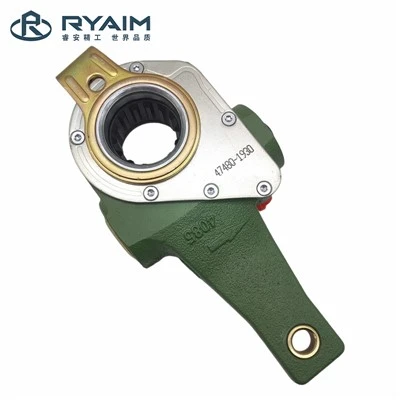
Tata Truck Series Manual Slack Adjuster 参考文献
- China National Standardization Administration. (2021). GB 4806.7-2016: Food safety national standard for plastics for food contact. Beijing: Standards Press of China.
- Ministry of Ecology and Environment of China. (2022). Management methods for the restriction of hazardous substances in electrical and electronic products. Beijing: China Environment Press.
- China National Standardization Administration. (2019). GB 6675.1-2014: National safety standard for toys – Part 1: General requirements. Beijing: Standards Press of China.
Zhejiang Ryaim Auto Parts
As one of the most professional chinese domestic type manufacturers and suppliers in China, we’re featured by quality products and good service. Please feel free to wholesale custom made chinese domestic type from our factory. Contact us for more details.
Address: No. 78, Yexiao Road, Yaojiang Town, Zhuji City, Zhejiang Province
E-mail: bd@zjryaim.com
WebSite: https://www.ryaimchina.com/
