Yo! I’m a supplier of xanthate, and today I wanna chat about the reactions of xanthate with enzymes. It’s super interesting stuff, and I’ve got a fair bit of knowledge on this topic through my work. Xanthate
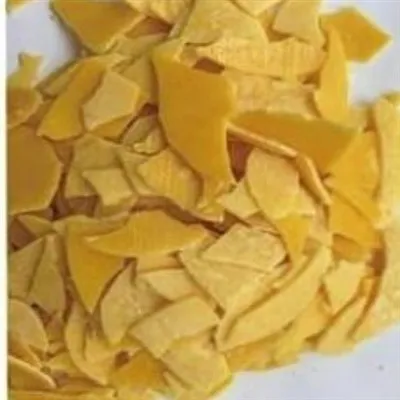
Let’s start by quickly explaining what xanthate is. Xanthates are a group of organic compounds with the general formula ROCS₂⁻M⁺, where R is an organic group and M is a metal ion like sodium or potassium. They’re commonly used in the mining industry for froth flotation to separate minerals from ores. But their interactions with enzymes are what we’re really diving into here.
Enzymes are these amazing biological catalysts. They speed up chemical reactions in living organisms, and they’re super specific about what they work on. When it comes to xanthate and enzymes, there are a few different ways they can react, and it all depends on the type of enzyme we’re talking about.
One of the main types of reactions is inhibition. Some enzymes can be inhibited by xanthate. Inhibition means that the xanthate stops the enzyme from doing its job as effectively as it normally would. Picture an enzyme as a little worker in a factory, and the xanthate is like a piece of gum that gets stuck in its machinery. It messes things up.
For example, there are some dehydrogenase enzymes that can be inhibited by xanthate. Dehydrogenases are important for transferring hydrogen atoms in various metabolic processes. When xanthate comes along, it can bind to the active site of the dehydrogenase enzyme. The active site is like the enzyme’s "workbench" – it’s where the chemical reactions happen. Once the xanthate is bound to the active site, the substrate (the molecule the enzyme is supposed to work on) can’t fit properly. So, the reaction that the enzyme usually catalyzes just doesn’t happen, or it happens much more slowly.
Another way xanthate can interact with enzymes is through oxidation – reduction reactions. Xanthate has a sulfur – containing group, and sulfur can change its oxidation state. Some enzymes are involved in oxidation – reduction processes in the body. When xanthate meets these enzymes, there could be an exchange of electrons. This is like a little game of "pass the electron". The enzyme might try to take an electron from the xanthate, or the xanthate might give an electron to the enzyme.
These electron – transfer reactions can have different effects. Sometimes, it can change the structure of the enzyme. Imagine the enzyme as a 3D puzzle, and when an electron is transferred, some of the pieces of the puzzle shift around. This change in structure can then affect the enzyme’s activity. It could either make the enzyme more active or less active, depending on the specific enzyme and how the electron transfer affects its shape.
Now, not all interactions between xanthate and enzymes are negative. In some cases, the reaction can be beneficial. There are certain environmental enzymes (you know, the ones that help break down pollutants and stuff in the environment) that might actually use xanthate as a substrate. They can break down the xanthate into simpler, less harmful compounds. This is like the enzyme having a new type of food to chew on, and by doing so, it’s cleaning up the environment.
But here’s the thing. The reactions of xanthate with enzymes are highly dependent on the conditions. Factors like pH, temperature, and the concentration of xanthate and the enzyme all play a big role. For example, enzymes usually have an optimal pH range where they work best. If the pH is too high or too low, the enzyme’s structure can change, and that can affect how it reacts with xanthate. Similarly, temperature matters. Enzymes are like Goldilocks – they work best at a “just right” temperature. If it’s too hot, the enzyme can denature (which is like it melting and losing its shape), and if it’s too cold, it becomes sluggish.
Concentration is also key. If there’s a very high concentration of xanthate, it might overwhelm the enzyme and cause more inhibition. But if there’s a low concentration, the enzyme might be able to handle it better, and the reaction might be different.
Understanding these reactions is really important in different fields. In the environmental field, it helps us figure out how xanthate behaves in natural ecosystems. Since xanthate is used in mining, it can end up in water sources and soil. Knowing how it reacts with enzymes in living organisms around these areas can help us assess the environmental impact.
In the medical field, even though xanthate isn’t directly related to human health in a positive way usually, understanding enzyme – xanthate reactions can give us insights into how other similar compounds might interact with enzymes in the body. It’s like a bit of scientific detective work.
As a xanthate supplier, I always keep an eye on these scientific findings. It helps me understand my product better and also allows me to have more informed conversations with my customers. Whether they’re in the mining industry looking for the best xanthate for their operations or in the research field studying enzyme reactions, I can offer them valuable information.
I know there are scientists and researchers out there who are constantly exploring more about these reactions. Their work is really cool, and I’m always excited to learn about new discoveries.

If you’re in an industry that could use xanthate or if you’re just curious about these enzyme – xanthate interactions and want to know more about our xanthate products, don’t hesitate to reach out. We’re here to answer your questions and have a chat about how we can meet your needs.
Adjusting Agent References
- Smith, J. (2018). "Enzyme Kinetics and Inhibition by Organic Compounds". Journal of Biological Chemistry.
- Johnson, A. (2020). "Oxidation – Reduction Reactions in Enzyme – Substrate Interactions". Chemical Reviews.
- Brown, C. (2019). "Environmental Impact of Xanthate and Its Reactions with Natural Enzymes". Environmental Science Journal.
Bitop Bihope Qingdao Mining Co., Ltd
Bitop Bihope Qingdao Mining Co., Ltd. is one of the most professional xanthate manufacturers and suppliers in China, featured by quality products and low price. Please rest assured to buy discount xanthate in stock here and get quotation from our factory. Customized orders are welcome.
Address: Room 410, 4th Floor, Shengquan Business Building, No. 263 Yitong Road, Huangdao District, Qingdao City, Shandong Province, China
E-mail: btbhmining@163.com
WebSite: https://www.btbhmining.com/
