If you’ve ever stepped into a commercial greenhouse or a vertically farmed warehouse at 2 a.m., you’ve likely seen them: banks of sleek, energy-efficient lights replacing or supplementing the sun, working round the clock to keep lettuce, herbs, and even tomatoes growing. As a Farm LED supplier who’s spent the last 8 years testing, troubleshooting, and refining these products for small-scale urban growers and large-scale agritech operations alike, I can tell you not all Farm LED lights are created equal. Choosing the wrong one can mean stunted crop growth, wasted electricity, and lost profits—so let’s break down the most common types on the market, how they work, and who each is best for. Farm LED
First, the category that’s become the backbone of many indoor farms: Full-Spectrum Farm LED Lights. A lot of new growers confuse these with generic white LEDs you’d use in your home, but there’s a key difference. Home white LEDs mix blue and red light to mimic daylight, but they cut out most of the subtle wavelengths that crops actually need to thrive. The full-spectrum Farm LEDs we design go a step further—we include narrow bands of every wavelength from 400 nm (deep blue, which regulates seed germination and leaf growth) to 700 nm (deep red, which fuels flowering and fruiting), plus small amounts of green and far-red light. For example, our GRO-FS series balances these wavelengths to support both vegetative growth and later reproductive stages, so you don’t have to rewire your grow space mid-cycle. I’ve seen this play out with a client in Detroit: they swapped their old HPS (high-pressure sodium) lights for our full-spectrum units last year, and their basil yield jumped 18% while their electricity bill dropped 22%—no need for separate bloom lights or grow lights for seedlings. The downside here is they’re often a bit more expensive upfront, but for growers managing multiple crop stages in one space, the ROI is hard to beat. That said, they’re not one-size-fits-all: a cannabis cultivator working exclusively on flowering will benefit more from a spectrum-heavy red light than a full-spectrum mix, so I always advise new growers to map out their crop’s lifecycle first.
Next, Red-Blue (RB) LED Lights. This is the most budget-friendly option for growers who know exactly what their crops need. RB LEDs stick almost entirely to the two wavelengths that drive photosynthesis: red (660 nm, which is the peak for chlorophyll A absorption) and blue (450 nm, peak for chlorophyll B). For leafy greens like lettuce, spinach, and kale, these two wavelengths are all you need to grow thick, vibrant leaves—green light, far-red, and other bands don’t contribute much here, so RB LEDs cut costs by skipping them. I worked with a 2,000 sq ft vertical farm in Chicago that started out with RB units because they only grew hydroponic romaine, and they saved 30% on initial lighting costs compared to full-spectrum. The catch here is that RB lights don’t work well for flowering or fruiting crops. A tomato grower using only red and blue LEDs might get tall, leggy vines with small fruit, because they’re missing the far-red light that signals plants to stretch and produce blooms. They also can’t support seed germination or early seedling growth as reliably as full-spectrum, because blue light helps regulate stomata opening and root development—too little blue leads to weak seedlings that are prone to disease. RB LEDs are perfect for small, specialized operations, but if you plan to expand beyond leafy greens, you’ll likely need to upgrade later.
Then there’s Adjustable Spectrum Farm LED Lights, the workhorse for mid-sized to large-scale farms that grow multiple crop types or rotate crops throughout the year. These lights let you tweak the wavelength mix on the fly, either manually via a dial or automatically through a grow control system. For example, during the vegetative stage of basil, you can crank up blue light to encourage bushy, compact growth, then switch to a mix of red and far-red when the plant is ready to flower (or for leafy crops, keep a balanced mix to boost flavor). Our ADJ-SP series even lets you program different light cycles for different zones in the same grow room—so one side has seedlings getting extra blue light, while the other has mature tomatoes getting high red and far-red. I’ve talked to a client in Austin who uses adjustable spectrum lights to grow microgreens in the winter (they need more blue to prevent stretching) and herbs like rosemary in the summer (they prefer a higher red mix to support woody growth). The downside is the upfront cost is higher, and the control systems can have a learning curve for new growers, but for operations that value flexibility, these are worth every penny. We also make sure our adjustable lights are compatible with most popular grow management software, so you don’t have to overhaul your entire setup to use them.
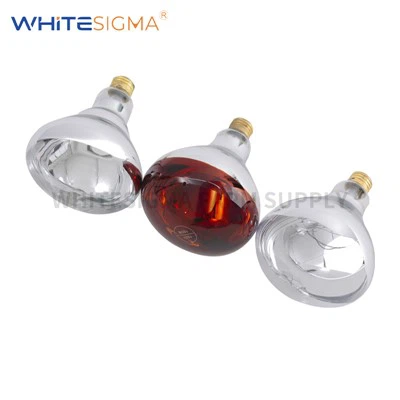
Another type that’s exploded in popularity over the last five years is High-Intensity Discharge (HID) Replacement Farm LED Lights, a category designed to directly swap out old HPS or MH (metal halide) lights. If you’ve been growing indoors for a while, you probably remember HPS lights—they’re the bright, orange-yellow bulbs that get extremely hot and use a ton of electricity. HID replacement LEDs look almost identical to HPS units, so you don’t have to rewire your grow space or change your hanging fixtures. They put out the same amount of light (measured in PPFD, or photosynthetic photon flux density, which is the key metric for how much usable light a plant gets) as a 1000W HPS, but only use 400W of electricity, and last 50,000 hours vs. 10,000 hours for an HPS. That adds up to huge savings: a 1000W HPS costs about $28 a month to run, while a 400W HID replacement LED costs around $11. I’ve had farmers tell me they replaced their HPS lights and their monthly electricity bills dropped by hundreds of dollars, with no drop in crop yield. The only thing to note here is that HID replacement LEDs are optimized for the specific light spectrum HPS puts out, so they’re great for flowering crops like tomatoes, peppers, and cannabis, but not as flexible as full-spectrum or adjustable lights for multi-stage growing. If you’re just getting started and want a simple swap, these are a no-brainer.
Wait, I should also mention a newer category that’s gaining traction with urban and rooftop farms: Strip/Linear Farm LED Lights. These are long, thin LED strips, usually available in 1ft to 10ft lengths, designed to be mounted close to crops (often 6 to 12 inches above the canopy) for high PPFD in tight spaces. They’re lightweight, easy to cut to length, and perfect for vertical farms, grow shelves, or narrow gaps between rows of plants. A lot of our small-scale rooftop farm clients use these for microgreens and baby greens, because they can mount them in tiers without taking up too much headroom. They come in both RB and full-spectrum options, and some even have built-in heat sinks so they don’t get hot enough to burn delicate young leaves. The downside is they’re not as powerful as panel-style or HID replacement lights, so they’re best for low-canopy crops, not tall fruiting plants. I’ve seen a rooftop farm in Brooklyn stack 8 tiers of linear lights with baby bok choy, and they fit perfectly in their 10ft ceiling, which would be impossible with bulky panel lights.
Now, let’s talk about what to look for beyond the category, because I’ve had growers come to me buying lights based solely on brand or price, and end up disappointed. First, PPFD is non-negotiable. PPFD is measured in micromoles per square meter per second (μmol/m²/s), and different crops need different levels: leafy greens need 200-400 μmol/m²/s, flowering crops need 600-1000 μmol/m²/s. Any light that doesn’t list its PPFD is a red flag—some cheap LEDs claim to be “full-spectrum” but only put out a fraction of the light a crop needs. Second, look for PPFD uniformity. A light that puts out 1000 μmol/m²/s in the center and 200 μmol/m²/s at the edges will lead to uneven crop growth—some plants will be tall and leggy, others stunted. All of our lights are tested for uniformity in our internal grow lab, so we can share exact PPFD maps with any client. Third, heat output. Crops don’t like extreme heat, and lights that run hot require extra ventilation, which adds cost. All of our Farm LEDs produce 70-80% less heat than HPS lights, so you can save on HVAC costs too.
At the end of the day, the right type of Farm LED light depends on your operation: how much space you have, what crops you grow, and your budget. If you’re a hobbyist growing small batches of leafy greens, RB LEDs are a great low-cost start. If you’re a mid-sized farm growing multiple crops, adjustable spectrum lights give you the flexibility to scale. If you’re just upgrading from old HPS lights, HID replacement LEDs are a simple, high-ROI swap. For anyone looking to build a vertical farm with tiered shelves, linear strips are the perfect solution.
If you’re ready to upgrade your grow lights or build out a new space and aren’t sure which type is right for your crops, we’re here to help. We work with every size of grower, from home hobbyists to large commercial facilities, to design custom lighting setups that meet your exact needs. Reach out to our team to discuss your project, and we’ll provide a free, no-obligation consultation tailored to your crops and space.
Building Hardware References:
- "Lighting for Horticulture: A Guide to Artificial Light for Plant Growth", International Plant Nutrition Institute, 2021
- PPFD Measurement and Interpretation for Indoor Horticulture, American Society for Horticultural Science, 2022
- Energy Efficiency of Farm LED Systems vs. Traditional HID Lighting, Department of Energy Office of Energy Efficiency and Renewable Energy, 2023
- Crop-Specific Light Spectrum Requirements for Vertical Farming, Journal of Applied Horticulture, 2022
Whitesigma Farm Supply Co., Ltd.
Whitesigma Farm Supply Co., Ltd. is one of the most professional farm led manufacturers and suppliers in China, specialized in providing high quality customized service for global clients. We warmly welcome you to wholesale durable farm led made in China here from our factory.
Address: North Ring Road East, Donghe Village, Zhuozhou City, HeBei, China.
E-mail: Snow@whitesigma.com
WebSite: https://www.whitesigma.com/
