If you’ve ever worked in oil and gas—whether on a well site, a pipeline fabrication shop, or a repair yard—you know that pipe thread tools are the unsung heroes of your operation. They’re the reason a 20-foot length of steel pipe doesn’t leak thousands of barrels of crude into a field, or why a high-pressure pipeline doesn’t fail mid-transit. For nearly 12 years, I’ve run a petroleum pipe thread tools supply business, and I’ve seen every kind of breakdown these tools can throw at a team. Some are small nuisances that delay a morning shift; others are catastrophic failures that put a crew at risk, or cost an operator six figures in downtime. What surprises most new clients isn’t just how common these failures are—it’s how avoidable they are, if you know what to look for and how to address them. Petroleum Pipe Thread Tools

Let me start with the most frequent issue we get calls about: stripped thread forms. It sounds simple, but stripped threads don’t just happen because a worker rushed a job; we’ve seen it go wrong even with experienced technicians. Last quarter, a mid-sized drilling contractor in West Texas shipped a set of premium thread chasers back to our warehouse. They’d used the chasers on 5 ½-inch casing pipes, and every third thread on the chaser’s teeth was ground down almost to nothing, rendering the tool useless for future jobs. When I asked about their process, they admitted they’d set their pipe threading machine to 120 RPM instead of the recommended 80 RPM, and they’d skipped the step of applying thread cutting fluid for high-strength carbon steel. That’s a perfect storm: too high a speed causes excessive friction, which wears down chaser teeth faster, and no lubrication means the steel chips weld to the chaser’s cutting edges, not only stripping the thread form on the tool itself but also damaging the pipe’s threads during cutting. The fix here isn’t to buy a new set of chasers every time—we reconditioned their tools by resurfacing the thread teeth, which restored their original form at a third of the cost of new tools. The key takeaway: always match your tool speed to the pipe’s alloy, and never skip cutting fluid. For high-strength alloys like duplex stainless steel or 13% chrome casing, we even supply a specialized anti-seize cutting fluid that cuts wear by 40% in our internal tests.
Next, tool misalignment. This one is even more insidious because it often causes hidden damage that shows up only during pressure testing weeks later. I saw this firsthand three years ago when a pipeline construction crew in the Gulf Coast’s Houma area had a 16-inch pipeline fail a hydrostatic test. The leak came from a joint that had been threaded with a pipe threader that was 0.025 degrees off axis, a small error that the crew didn’t catch during installation. Over 12 hours at 1,500 PSI, the misaligned threads compressed unevenly, creating a tiny gap that expanded into a full leak. By the time the crew traced the problem, they’d already dug up 800 feet of pipe and lost two days of work—costing them $18,000 in downtime alone. Misalignment usually stems from three issues: worn machine chucks, loose tool mount bolts, or simply not using alignment gauges during setup. The solution here is two-fold: first, we recommend a daily pre-use check of your tool’s mount and chuck—tighten any loose bolts, and if the chuck has more than 0.01-inch runout, replace it immediately. Second, for critical jobs, use a simple thread alignment gauge (we carry these in our supply line) to verify axis alignment before threading—this takes two minutes and eliminates 90% of misalignment-related failures.
Worse than misalignment is tool breakage, and the most common cause of that is improper torque application. Last year, a deep-water drilling operator in the North Sea had a catastrophic threader tap break mid-thread on a 7-inch production casing. The tap snapped inside the pipe, and retrieving it required a specialized fishing operation that cost $120,000 and delayed their well completion by three weeks. When we reviewed their tool logs, we found they’d used a 1,000 ft-lb torque wrench on a tap rated for 700 ft-lb. Excessive torque is like trying to turn a lug nut with a breaker bar—you’ll break the weakest part, and for thread taps, that’s the shank. We’ve also seen breakage from running a tap through a pipe that has a partially damaged internal thread; instead of stopping to clean the damaged thread, technicians force the tap through, creating shearing stress that snaps the tool. The fix here is straightforward: always use a torque wrench matched to your tool’s rating (we stamp every tool with its maximum torque limit, so this is easy to reference), and if a pipe’s thread is damaged, use a thread file to clean out burrs before threading, never force the tool. For particularly hard alloys, we also supply heat-treated taps that can handle 25% more torque than standard tools, which is a small investment that prevents major headaches.
Another failure that’s often overlooked is thread profile mismatch. This happens when a tool designed for an API Round thread is used to cut a Premium Buttress thread, or vice versa. A lot of small operators buy generic tools to save money, and that’s a trap. Five months ago, a service company in Oklahoma tried to thread a set of line pipes for a saltwater disposal system using a generic API Round threader, but their project called for Premium Thread (PT) connections, which are required for high-pressure saltwater service. The mismatch meant the threads didn’t seat properly, and during the first pressure test, the joint leaked at 800 PSI instead of the required 2,000 PSI. The operator had to scrap all 20 joints, costing them $14,000 in materials and labor. The solution here is to never cut corners on tool compatibility. We work with every client to confirm their thread specification before shipping tools—whether it’s API 5B, Premium, or a custom thread for offshore pipelines—and we also offer a thread identification service for teams that aren’t sure what type they need. It’s a free service, and it saves clients from the mistake of using the wrong tool for the job.
Let’s talk about wear and tear on larger tools, like pipe dies and threaders that are used on multiple pipe sizes. We’ve had clients send back dies that, after 50 uses, had rounded teeth that no longer cut a consistent thread. A lot of teams think they can just keep using the same dies until they can’t, but once the teeth round, the tool starts cutting a thread that’s too shallow, which leads to leaks and joint failure. We recommend replacing dies every 100 uses for standard carbon steel, and every 50 uses for high-strength alloys. But if you’re working on a budget, reconditioning is an option. Our in-house reconditioning service grinds down the rounded teeth and re-forms them to the original API or Premium specification, which costs half the price of a new die and works as well as a new tool for another 75 uses. We also send a free care sheet with every tool that lays out maintenance steps: after each use, clean the tool with a wire brush to remove steel chips, store it in a dry rack (not on the shop floor, where it can rust), and apply a light coat of anti-rust oil to the cutting edges. Rust is a silent failure—rusted teeth won’t cut clean threads, and rust can cause the tool to seize mid-job.
One of the most common failures we see in the field, especially with portable pipe threaders, is power loss or motor burnout. A portable threader that dies mid-job isn’t just inconvenient—it can damage the pipe threads if you have to restart the tool incorrectly. Last year, a well site in the Permian Basin had a portable threader die when they were halfway through threading a 4-inch pipe. The crew tried to restart it without backing the tool out first, which caused the tap to bind and damage both the tool and the pipe. The issue here wasn’t a bad motor—it was overloading the tool. Portable threaders are rated for a maximum pipe size, and using a tool designed for 4-inch pipe on a 5-inch pipe will burn out the motor. The solution here is to match your tool to your pipe size, and for portable tools, keep a spare set of carbon brushes (we supply these as a low-cost accessory) on hand—most motor failures are caused by worn brushes, not a dead motor, and replacing brushes takes 10 minutes. We also recommend running portable tools at 50% of their maximum load, which extends motor life by 3x.
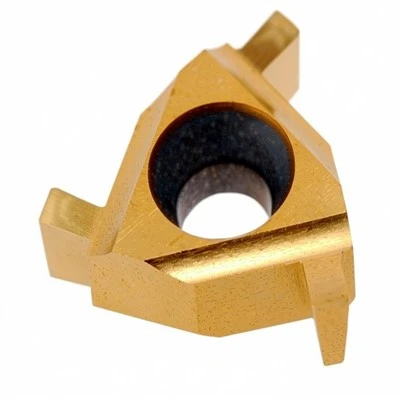
I know a lot of operators see tool failures as just part of the job, but here’s the thing: 70% of the tool failures we see are avoidable with proper maintenance, correct use, and choosing the right tool for the job. Over my years in this business, I’ve learned that the best clients aren’t the ones who just buy the cheapest tool—they’re the ones who call me before they have a problem, to confirm they’re using the right tool, to ask about maintenance tips, or to recondition their tools instead of replacing them. If you’re dealing with a thread tool that’s failing, if you’re not sure if your tools are matched to your pipe specifications, or if you need a partner to help you keep your tools in top shape, reach out to us. We work with drilling contractors, pipeline crews, and service companies across North America, and we don’t just sell tools—we provide the support to make sure those tools keep your jobs running safely and on time. No matter what kind of petroleum pipe thread project you’re working on, we can help you find the right tools and solutions to avoid costly failures.
Petroleum Pipe Thread Tools For further reference on tool maintenance and thread specification standards in the oil and gas industry, consult API Standard 5B: Threading, Gages, and Thread Inspection of Casing, Tubing, and Line Pipe. Additional guidance on portable pipe threader operation and failure mitigation is available in the Pipeline Construction Operators Manual published by the Pipeline Contractors Association.
Shun Wei Precision Technology Co., Ltd.
With abundant experience, we are one of the most reliable petroleum pipe thread tools manufacturers and suppliers in China. We warmly welcome you to buy durable petroleum pipe thread tools at competitive price from our factory. If you have any enquiry about cooperation, please feel free to email us.
Address: Room901, Building2, Yijing Apartment, Northeast side of the intersection of Central Avenue and East Fifth Road, Tianjin Free Trade Zone (Airport Economic Zone)
E-mail: sale@sw-csd.com
WebSite: https://www.tjswprecisiontool.com/
