As a drone battery supplier who’s spent the last 8 years troubleshooting every kind of cell imbalance issue from small consumer drones to industrial mapping units, I get it—nothing kills a flight faster than a mid-air power drop or a battery that only lasts half its rated capacity after a dozen charge cycles. A lot of drone operators think “cell balance” is just a fancy tech term reserved for factory equipment, but it’s actually one of the most straightforward, critical maintenance steps you can do to extend your battery’s life and keep flights safe. Over the years, I’ve walked hundreds of part-time pilots and full-time drone operators through this process, and I’ve seen firsthand how a 10-minute balance fix can turn a dying battery into a workhorse that lasts 50+ cycles more than its unbalanced counterpart. Let’s break this down, no jargon, just real-world stuff that works. Drone Battery
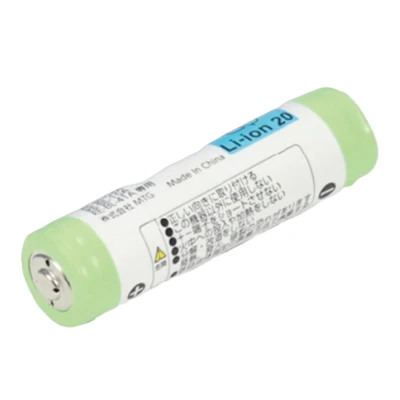
First, let’s get the basics straight: what even is cell imbalance? Drone batteries, whether they’re lithium-polymer (LiPo) for consumer models or lithium-ion (Li-ion) for industrial heavy-lift drones, are made up of individual battery cells wired together in a series. Each cell has a specific voltage range—for LiPo, that’s roughly 3.7V when fully charged, 3.0V when fully discharged, and 4.2V is the maximum safe charge. When these cells are balanced, they all sit within 0.05V of each other during charge and discharge. The problem is, every cell is a little different: tiny manufacturing variations, slight wear from frequent flights, or even leaving a battery at 100% charge in a hot car can make one cell drift higher or lower than the rest. Over time, that gap grows. If one cell is at 3.9V and another in the same pack is at 3.5V, that’s a 0.4V gap—and when you charge the pack, the higher cell will hit 4.2V before the others, making the charger stop too early, so lower cells never get a full charge. When you discharge, the lower cell will drop to 3.0V before the others, making the flight end abruptly, and overcharging or over-discharging individual cells is how batteries get swollen, lose capacity, or even fail mid-flight.
I see a lot of operators skip balancing because they think their charger “does it automatically.” That’s only half true. Most budget chargers (the ones that come with entry-level drones) do a rough balance, but they often miss tiny gaps that creep in after 10 or 20 cycles. For professional operators who run 10+ flights a week, that rough balance just doesn’t cut it. Even our own drone batteries, which are tested and balanced at the factory before shipping, develop small imbalances after 30 to 40 cycles from regular use. Ignoring that leads to the number one complaint we get at the supply shop: “My battery only lasts 10 minutes now, it used to do 20.” More often than not, that’s a simple cell imbalance issue, not a dead battery.
So, how do you actually balance the cells in a drone battery? Let’s split this into two methods: in-field quick balance for when you’re between flights, and a deeper bench balance for when a battery is showing clear signs of imbalance. Both are doable with basic gear, no fancy lab equipment needed.
First, the quick field balance. This is for when you’re at a job site, waiting to fly the next mission, and you notice your battery’s runtime is shorter than usual, or your charger is giving a “cell imbalance” alert. Here’s what you need: your regular charger, a cell voltage checker (you can grab one for $15 to $20 on our shop, it’s one of the most useful tools for any drone operator), and ideally, a small balance adapter that matches your battery’s JST-XH or XT60 balance port (most batteries have a dedicated balance port separate from the main power plug). Start by charging the battery to its full recommended voltage. Once the charger stops, pull out the cell voltage checker and test each cell individually: plug the checker into the balance port, and it’ll show you the voltage of each cell. If the gap between the highest and lowest cell is 0.1V or less, your battery is fine. If it’s more than 0.1V, here’s the quick fix: take a small, low-power load (I use a 10W LED bulb attached to a small alligator clip set) and connect it to the positive and negative terminals of the cell that’s reading too high. Let it drain that cell slowly, checking the voltage every minute, until it matches the lowest cell. Then, plug the battery back into your charger and let it do a full charge. That’s a 5-minute fix, and it’ll get you through the rest of your day’s flights. I did this last month with a landscape operator who had a 5-hour day of mapping runs—he thought he’d have to drive back to the shop for a new battery, but a 5-minute balance fixed it, and he flew 8 more missions without any issues.
For the deeper balance, this is for batteries that are 30+ cycles old, or ones that show clear symptoms: runtime drop, swollen casing, or the charger repeatedly alerting for imbalance. This takes a bit more time, but it’s well worth it for extending battery life. First, fully discharge the battery to the minimum safe voltage for each cell. Most drone batteries have a cut-off at 3.0V per cell, so use your cell checker to make sure no cell drops below 3.0V during discharge—if one does, stop, that’s the weak cell that’s causing the imbalance. Next, connect the battery’s balance port to a programmable balance charger (these are a step up from basic chargers, and they’re a staple for our industrial drone customers). Set the charger to “balance charge” mode, not regular charge, and input the number of cells in your battery (most consumer drones use 3S, some heavy-lift use 6S, so double-check that). Let the charger do its work—this isn’t just charging, it’s a two-way process: the charger will charge the weaker cells slightly, while allowing the stronger cells to discharge a tiny bit until all cells hit exactly 4.2V. Don’t rush this process; a full balance charge can take 1 to 2 hours, depending on how big the gap is. Once it’s done, test each cell again with your checker—they should all be within 0.05V of each other. If they’re not, repeat the process. If after two cycles they’re still not balanced, that’s a sign the battery is reaching end of life, and it’s time to look for a replacement (we can help you with that, more on that later).
Now, a few common mistakes I see operators make when balancing cells that can actually make the problem worse. First, don’t over-discharge cells. I’ve had operators try to “reset” a battery by draining it all the way to 0V, which is a huge no-no. LiPo and Li-ion cells can’t handle being fully discharged, and that causes permanent damage. I always tell people: stop discharging when the first cell hits 3.0V, that’s your safe limit. Second, don’t use a random load to drain cells. A lot of people use a resistive load that’s too high, which can drain a cell too fast and cause it to overheat. Stick to low-power loads (5W to 10W) when doing quick balances. Third, don’t skip factory balancing. When you buy a new drone battery from us, it’s factory-balanced to within 0.02V, but that only lasts so long. We always remind customers to balance their batteries every 10 to 15 cycles, even if they don’t notice a problem.
Also, a quick note on battery care to prevent imbalance in the first place. Storing your batteries at the right voltage makes a huge difference. If you’re not going to use a battery for more than a week, store it at 3.8V per cell, not full charge or fully discharged. We include storage voltage instructions with every battery we sell, and it’s one of the most common tips we share to help customers keep their cells balanced longer. Another tip: don’t mix old and new cells. If you have a 3S battery, don’t add a new cell to a pack of old cells—they’ll never balance properly, and you’ll risk the new cell wearing out quickly.
I know a lot of operators are hesitant to do this themselves, and that’s totally fine. If you’re not comfortable with a balance charger, or you have a high-capacity industrial battery that needs a more precise balance, we offer balance testing and services right at our shop. We test every cell individually, run a full balance cycle, and give you a report on each cell’s health, so you know exactly what’s going on with your battery. We even offer free balance checks for any customer who buys a battery from us, just bring it in with your receipt.
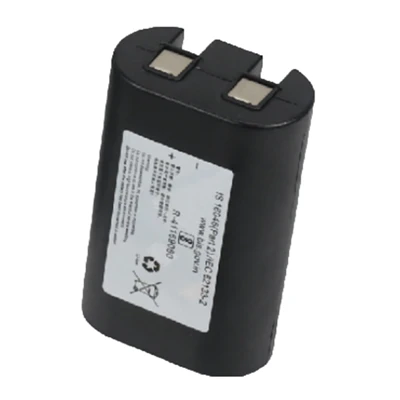
At the end of the day, balancing drone cells isn’t rocket science—it’s a small, regular maintenance step that saves you money, keeps your flights safe, and extends the life of your most expensive drone accessory. If you’re dealing with a battery that’s not performing like it should, or you’re looking for a reliable battery supply partner who cares about helping you keep your gear in shape, don’t hesitate to reach out to us to discuss your needs. We work with everyone from part-time hobbyists to large industrial fleets, and we’re here to help you get the most out of every flight.
Two Wheeler Battery References
- Lithium-Ion Battery Basics for Drones, Drone Industry Insights, 2022
- Cell Imbalance Causes and Mitigation, Journal of Power Sources, Vol. 412, 2019
- Best Practices for Drone Battery Maintenance, FAA Unmanned Aircraft Systems Safety Brief, 2021
- LiPo Battery Balance Charging Standards, International Electrotechnical Commission (IEC) 62660, 2018
Zhuhai Greaton Electronic Technology Co., Ltd.
As one of the most professional drone battery manufacturers and suppliers in China, we have world-leading production equipment and strong manufacturing capabilities. Please rest assured to wholesale advanced drone battery in stock here from our factory. Customized orders are welcome.
Address: 2nd Floor, Building A3, No. 6, Liulu, Xinqing Science and Technology Industrial Park, Jing’an Town, Doumen District, Zhuhai City
E-mail: wangchen1@psbattery.cn
WebSite: https://www.cngreaton.com/
