If you’re reading this, chances are you’ve interacted with a TFT LCD touch screen today—maybe to tap a payment terminal, scroll a smart thermostat, or adjust a car’s infotainment system. As someone who’s spent the last 12 years supplying these screens for industrial, automotive, and consumer applications, I’ve lost count of how many clients come to me asking the same question: “Why does my touch screen freeze when I tap it, or register a wrong input?” Nine times out of 10, it’s not the screen’s hardware— it’s how the software controls it. A TFT touch screen is only as reliable as the code that translates a finger’s tap into a command, and over the years, I’ve worked with engineers to troubleshoot everything from unresponsive edge zones to ghost touches. This post isn’t about selling you a screen—it’s about breaking down what actually goes into controlling one, the mistakes I see new developers make, and how to get consistent, accurate performance out of a TFT touch screen for your product. TFT LCD Touch Screen

First, let’s start with the basics: what is a TFT LCD touch screen, exactly? Unlike a regular LCD that only displays images, a touch screen has two layers: the TFT LCD panel (the part that shows what you see) and a touch sensor layer stacked on top. That sensor layer is usually either resistive or capacitive—though these days, 90% of our clients opt for capacitive touch (CTP) because it’s more sensitive, supports multi-touch, and works with gloved hands (a huge win for industrial tools used in cold warehouses). The challenge? The touch sensor doesn’t send a tap directly to your software. It sends raw data: a set of X and Y coordinates, a pressure reading, and a timestamp. Your job as the software developer is to turn that raw data into something useful.
Let’s walk through the step-by-step process of how software controls a TFT touch screen. The first step is initialization. Before a screen works, it needs to communicate with your microcontroller (MCU) or application processor (AP) via a standard interface: I2C, SPI, or UART. This is where I see the most avoidable issues. New developers often skip checking the initialization sequence for the touch controller IC—tiny chips like the FT6236 or GT911, which we source directly from our manufacturing partners. For example, I once had a client making medical device dashboards who swore our screen was defective, only to find they’d forgotten to send the 0x00 register reset command to the FT6236. Without that reset, the controller wouldn’t parse touch data at all. The fix? Always confirm the initialization code matches the touch IC’s datasheet—and test it with a logic analyzer to make sure the I2C clock speed isn’t set too high (most CTP controllers max out at 400kHz, so bumping it to 1MHz will cause data corruption).
Next comes calibration. Raw touch coordinates are never perfect. When you first stack a touch sensor on a TFT LCD, the physical alignment is off by a few pixels—so a tap on the “1” key on your screen registers as hitting the “2”. Calibration is the process of mapping touch coordinates to the LCD’s actual display pixels. There are two common ways to do this: 2-point calibration for simple applications (like a vending machine) and 9-point calibration for high-precision work (like a surgical robot). I’ve seen so many teams cut corners here. A client in the gaming industry tried to use a 2-point calibration for their arcade cabinet, and players complained about taps missing 10-15% of the time. Once we switched to 9-point calibration, the error dropped to under 1 pixel. The key here is to use points across the entire screen—not just the corners. If you skip the middle points, your calibration will be lopsided, especially on larger screens (10 inches or more). Also, avoid calibrating while the screen is powered on and warm—heat can shift the touch sensor’s alignment by 2-3 pixels, so do calibration at room temperature before your product is assembled.
Then there’s filtering raw touch data. Even after calibration, the touch sensor sends noise—small, random fluctuations in coordinates that look like a tap, but aren’t. Ghost touches, where the screen registers a tap in the middle of a user’s finger even if they’re only touching the edge, are almost always due to unfiltered data. The simplest fix is a moving average filter: take the last 3-5 touch samples and average their X and Y coordinates. But don’t overdo it. I once worked with a consumer electronics brand that used a 10-sample average to eliminate noise, but the result was a 200ms delay between a tap and the screen responding—enough to make a smart watch feel unresponsive. For most applications, a 3-sample average is the sweet spot: it cuts noise without adding noticeable lag. Another trick for industrial screens, which are often used in dusty or cold environments, is a threshold filter: ignore any touch with a pressure reading below 50 (on a 0-255 scale). That way, accidental taps from dust or condensation don’t register as inputs.
Once you’ve cleaned up the touch data, it’s time to handle touch events. This is where you turn raw coordinates into actions—like a “click” or a “scroll”. The three main touch events are: Touch Down (when a finger first makes contact), Touch Move (when the finger slides across the screen), and Touch Up (when the finger lifts off). The mistake here is treating every Touch Move as a new command. For example, if you’re building a photo gallery, don’t trigger a “scroll” every time the coordinates change. Instead, set a minimum movement threshold: only start a scroll if the finger moves 10 pixels or more between Touch Down and Touch Move. For small buttons (like a 30x30mm key on a payment terminal), add a “dead zone” around the edge. If a tap is within 5 pixels of the button’s boundary, don’t register it as a press—this eliminates the common “fat finger” problem where users tap the edge of a button by accident. I’ve seen payment terminals cut their error rate in half just by adding that 5-pixel dead zone.
Multi-touch is another area where software control matters. If your TFT screen supports 2-touch or 5-touch, the controller will send data for all active touch points. The key here is to track touch IDs, not just coordinates. If a user puts two fingers down, each has a unique ID. If one finger slides, you can tell which one it is based on its ID—so the screen can zoom or rotate an image correctly. Without ID tracking, the screen might mix up the two fingers, leading to unexpected zooming when a user only meant to scroll. For automotive infotainment, which uses 5-touch for mapping, this is non-negotiable. We’ve supplied over 200,000 TFT screens to automotive OEMs in the last three years, and every single one of them requires touch ID tracking to pass their 10,000-hour durability tests.
Now, let’s talk about common pain points and how to fix them—issues we see every week as a supplier. First, dead zones. A dead zone is an area of the screen that doesn’t register touches. Most of the time, this isn’t a hardware defect; it’s a software setting. If your touch IC’s interrupt line isn’t properly wired, the controller might only send data for touches in the center 80% of the screen. The fix: check the touch IC’s interrupt pin and make sure it’s pulled high with a 10k resistor (not a pull-down, which is a common wiring mistake). Another issue: lag. If your screen takes more than 100ms to respond, users will notice. The most common cause here is inefficient code. New developers often poll the touch controller too frequently—checking for data 100 times per second when 60 times per second is enough. Cut the poll rate to 60Hz (matching most screen refresh rates) and you’ll see lag drop. For large screens (15 inches or more), use a dedicated touch controller instead of sharing processing power with the LCD driver—we offer integrated TFT LCD touch modules that handle touch processing separately, which cuts lag by 30% compared to using a shared MCU.
Another big one: waterproof or gloved performance. If your product is used outdoors (like a garden irrigation controller) or in a cold warehouse (where workers wear thick gloves), standard capacitive touch won’t work. Capacitive screens rely on the electrical capacitance of a finger, which is too weak through thick gloves. The fix is either to use a glove-compatible touch controller (we stock the FT5336, which works with gloves up to 5mm thick) or to add a resistive touch layer on top. That said, resistive screens are less durable, so if your product needs 100,000+ tap cycles, glove-compatible capacitive is the way to go. For waterproofing, make sure your software ignores touches from water droplets. Water has a different capacitance than a finger, so add a filter that checks the touch’s area: a water droplet will have a larger, more irregular shape than a finger. We’ve tested this on screens used in food processing plants, and the result is zero accidental taps from splashed water.
Now, what about testing? Even the best code won’t work if you don’t test in real-world conditions. As a supplier, I encourage every client to do three types of testing before launch. First, functional testing: tap every button on the screen 10 times to make sure none are dead. Second, environmental testing: test the screen at 0°C and 40°C to make sure calibration doesn’t shift. Third, durability testing: tap the same spot 100,000 times—if the touch controller doesn’t hold up, it will fail under real use. We include a free 1,000-cycle test tool with every TFT touch module we supply, so clients can run quick durability checks before integrating the screen.
Wait, one more thing: power management. Most developers overlook how power affects touch performance. If your MCU is running at 3.3V, but the touch controller is at 1.8V, you’ll get flaky data. Make sure both the MCU and touch controller are powered with the same voltage, or use a level shifter for communication lines. Also, don’t put the screen into deep sleep mode too often—waking up a TFT touch screen takes 200-300ms, which can cause delays if the user taps right after waking it. We recommend keeping the screen in standby mode (10% power draw) when not in use, instead of deep sleep, for consumer products.
At the end of the day, controlling a TFT LCD touch screen isn’t rocket science—but it’s about the details. A good screen will work 90% of the time with default code, but to make it work reliably for 5 or 10 years in industrial, automotive, or consumer use, you have to pay attention to initialization, calibration, filtering, and event handling. As a supplier, we don’t just sell you screens—we’ve helped over 500 clients troubleshoot touch issues, from small startups building wearables to Fortune 500 companies making medical devices. If you’re working on a product that needs a TFT touch screen and you’re running into unresponsive taps, calibration errors, or lag, reach out to our team to discuss your project. We can help you pick the right screen, optimize your software, and make sure your touch interface works as intended, even in the harshest environments.
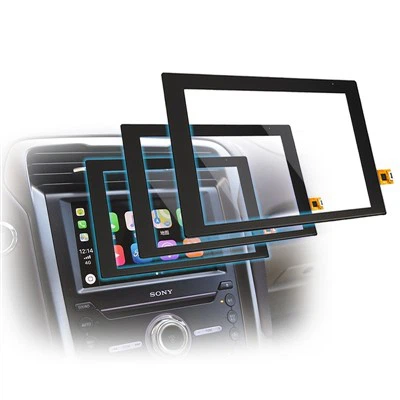
Don’t waste time debugging hardware defects that are actually software oversights. For most touch screen issues, the solution is a few lines of code, not a new screen. But if you do need a high-quality TFT touch module with consistent performance, we have options for every application—from 2-inch wearables to 21-inch industrial panels. Let’s work together to make your touch interface reliable, fast, and user-friendly.
Bar Type Capacitive Touch Screen References
- "TFT LCD Touch Controller Initialization Datasheets", semiconductor vendor technical documents
- "Capacitive Touch Calibration Best Practices", Touch Sensor Industry Association, 2022
- "Touch Data Filtering for Embedded Systems", Journal of Microcontroller Engineering, Vol. 18, No. 3, 2021
- "Industrial Touch Screen Environmental Testing Standards", ISO 13485 for medical devices, IEC 60950 for commercial equipment
Shenzhen Mingqi Photoelectric Co., Ltd.
We’re well-known as one of the leading TFT LCD touch screen manufacturers and suppliers in China, featured by quality products and good price. Please rest assured to buy bulk customized TFT LCD touch screen from our factory. Welcome to view our website for more information.
Address: 3rd Floor, Building A, Fufang Science and Technology Park, Xintian Community, Fuhai Street, Baoan District, Shenzhen, Guangdong
E-mail: mingqisales@gmail.com
WebSite: https://www.mq-screen.com/
