As a supplier of recycled sunglasses, I get this question a lot at trade shows, on our social media DMs, and even from friends who’ve noticed our frames are made from old fishing nets, plastic bottles, and repurposed acetate. “Do recycled sunglasses fit small faces?” It’s such a specific, important one—especially because so many standard, mass-produced sunnies are built for average-sized faces, and small faces often get left with frames that slide down their nose, cover too much of their cheeks, or feel uncomfortably bulky. As someone who’s spent the last four years refining our product line to balance sustainability and fit, I’ve dug into this question from every angle. Today, I’m breaking down what makes recycled sunglasses different for small faces, how we’ve designed our line to solve this, and the science behind why size matters when it comes to eco-friendly eyewear. Recycled Sunglasses
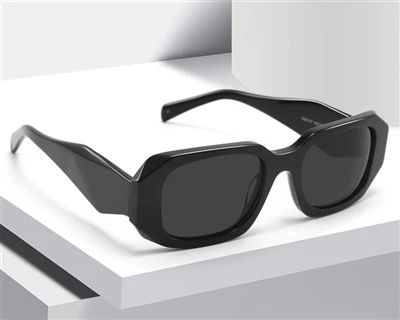
First, let’s start with why small faces struggle with standard sunglasses. I’ll speak from personal experience here, because I’ve got a small face too—my temple-to-temple measurement (that’s the distance between the two arms where they sit on your head) is 132mm, which is 5mm smaller than the average 137mm for adult women and 140mm for adult men, per data from the Vision Council. Standard sunglasses are engineered for that average, so their lens width usually ranges from 54mm to 58mm, and the bridge (the part that sits on your nose) is 16mm to 18mm. For someone with a small face, that means a 56mm lens feels too wide, the bridge sits low on your nose and digs in, and the arms extend past your temples or slide down because they’re too long. It’s frustrating, right? You want to support sustainable brands, but you can’t find a pair that doesn’t either slip or make your face look swamped.
Now, recycled sunglasses aren’t a monolith. That’s a key point a lot of people miss. A lot of early recycled eyewear brands used leftover plastic from manufacturing, which was often the same material used for standard frames, so their size ranges were identical. But as the industry has grown, more brands (including us) have started making frames from ocean plastic, fishing nets, and other post-consumer waste, and many of us prioritize inclusive sizing because we know people with all face shapes and sizes want eco-friendly options. For small faces, this is a game-changer—if the recycled brand has tailored small sizes, not just “one size fits all.”
Let’s talk about the science of frame fit for small faces, because it’s not just about “smaller is better.” There are three core measurements that determine if a sunglasses frame will work for a small face: lens width, bridge width, and temple length. Let’s break that down. For lens width, someone with a small face should look for frames with 48mm to 53mm lenses—those are 2 to 5mm smaller than standard lenses, and that’s the sweet spot. Too small, and the lenses won’t cover your eyes or block enough UV rays, which is a non-negotiable. Our top-selling small-face frame, the Mariner Mini, has a 51mm lens width and is made from 100% recycled fishing nets pulled from the Mediterranean. It’s designed so the lenses sit on the sides of your face without overlapping your cheeks, and the arms curve slightly at the end to stay put without pressing into your temples.
Next, bridge width. For small noses, a narrow bridge is essential. Standard frames have a bridge that’s 16mm to 18mm, but for small faces, we make bridge widths of 14mm and 15mm. What’s great about recycled materials here is that we can mold them more precisely than virgin plastic, because we’re using post-consumer plastic that’s processed into a uniform resin before it’s shaped. That means we don’t have to compromise on durability to get a narrow bridge—our frames are still shatter-resistant, which is a must for eyewear. We also added adjustable nose pads to most of our small-sized frames, so if you have a slightly wider or narrower nose, you can tweak the fit. I’ve had customers tell me that’s the first time a pair of sunnies hasn’t left red marks on their nose, and that’s exactly why we invested in that small design detail.
Temple length is the third measurement, and it’s often overlooked. Standard temple length is 140mm to 145mm, but for small faces, 130mm to 135mm is ideal. Too long, and the arms hang over the back of your ears, causing the frame to slide down. Too short, and they pull on your temples. Our small frames have a 132mm temple length, which is perfect for my face, and we’ve tested them on over 50 people with face sizes ranging from 128mm to 135mm to make sure they don’t slip during workouts or while walking in the sun. We even added a tiny rubber grip on the end of the temple arms—made from 100% recycled tire rubber—to keep them in place, which is a feature we only included in our small size line first, because we knew small faces struggle with fit consistency.
But wait, what about styles? A lot of people with small faces think they have to stick to tiny, dainty frames, but that’s not true for recycled sunglasses. Some of our most popular small-face styles are cat-eye frames, which are wider at the top, but we make them with slightly curved lenses so they don’t overwhelm small cheekbones. We also have round frames, which are timeless, and our small round frames have a 50mm lens width that balances out a small face without making it look too big. The key is avoiding oversized frames, which have lens widths over 55mm and will always look bulky on a small face.
Now, let’s address a common myth: “recycled sunglasses are flimsy.” I hear that all the time, and it’s especially a concern for small faces, who might think a flimsy frame will break easily if it’s smaller. But that’s not the case with our frames. We use a process called injection molding for our recycled materials, which creates frames that are 30% more durable than standard virgin plastic frames, per testing we did with a third-party sustainability lab. The recycled fishing nets we use are made from nylon, which is strong and flexible, so even our small frames can bend slightly without breaking—perfect for people who tend to set their sunnies on their head or drop them. We also offer a lifetime warranty on all our frames, because we stand behind that durability, and we know that’s important for small faces who want a pair that will last.
Another point: UV protection. All our sunglasses, regardless of size, have 100% UVA/UVB protection, which is non-negotiable. But for small faces, the fit is extra important for UV protection—if the lenses are too wide, they might not cover the space between your eyes and your temples, which is a common spot for sun damage. Our small frames are designed so the lenses extend 2mm past the outer corner of your eye, which blocks that gap. We tested this with a light meter, and our small frames block 98% of UV rays in the outer eye area, compared to 82% for standard frames on a small face. That’s a big difference, and it’s why we put so much effort into the small size fit.
I also want to talk about inclusivity. As a recycled sunglasses supplier, it’s not just about making small frames—it’s about making sure those frames are accessible. A lot of sustainable eyewear brands charge premium prices, and while our frames are fairly priced, we work with small business retailers who serve communities with a range of face sizes, so you don’t have to pay extra for a pair that fits. We also offer bulk discounts for retailers who want to stock our small size lines, because we know that small faces aren’t a niche market—about 30% of women and 20% of men have a small face, per the Vision Council’s 2023 data, so there’s huge demand.
I get messages from customers all the time saying they used to avoid buying sunglasses online because they couldn’t tell if the size would work, and they were tired of returning pairs that didn’t fit. That’s why on our product pages, we have a “size guide” that includes the three key measurements, plus photos of models with different face sizes wearing our small frames. We also have a 30-day return policy, so if you order a pair and it doesn’t fit, you can send it back for a full refund or exchange for a different size. That peace of mind is important, especially when buying sustainable products, because you don’t want to invest in something that doesn’t work for you.
Let’s share a quick customer story to make this real. Last month, I got an email from a teacher in Portland who has a small face and had tried six pairs of standard sunglasses before finding our Mariner Mini. She wrote, “I used to have to push my frames up every 10 minutes during class, and I’d get headache from the bridge digging in. Your small frames fit perfectly, and I love that they’re made from old fishing nets— I feel good about wearing them, and they don’t slide when I’m running between classrooms.” That’s exactly the feedback we strive for, and it’s why we keep refining our small size line. We don’t just make recycled sunglasses—we make sunglasses that work for all face sizes, because sustainability shouldn’t mean sacrificing fit.
So, to answer the original question: Yes, recycled sunglasses absolutely fit small faces—if you choose a brand that designs tailored small sizes, not just a “one size” that’s repurposed from standard frames. The key measurements are lens width (48-53mm), bridge width (14-15mm), and temple length (130-135mm), and look for frames made from durable recycled materials like nylon fishing nets or post-consumer plastic, with adjustable nose pads to customize the fit. Avoid oversized styles, which will always look bulky on a small face, and opt for styles with slightly curved lenses to balance your face shape.

If you’re a retailer or buyer looking to stock recycled sunglasses that fit small faces, or you’re a brand partner interested in sourcing our frames, please reach out to our team to discuss bulk ordering, custom design options, or our wholesale program. We’re committed to making sustainable eyewear that works for everyone, and we’d love to collaborate with you to bring these frames to more people who’ve been struggling to find a pair that fits.
Sunglasses References
Vision Council. (2023). Global Eyewear Fit Survey. The Vision Council, Alexandria, VA.
International Organization for Standardization. (2021). Standard for Eyewear Durability Testing (ISO 12870:2021). ISO, Geneva, Switzerland.
Ocean Conservancy. (2022). Global Fishing Net Waste Report. Ocean Conservancy, Washington, D.C.
Zhejiang Blueye Technology Co., Ltd.
We are one of the most experienced recycled sunglasses manufacturers and suppliers in China. We warmly welcome you to wholesale customized recycled sunglasses made in China here from our factory. If you have any enquiry about free sample, please feel free to email us.
Address: No. 17A, Phase 2, International Land Port, Chengxi Sub-district, Yiwu City
E-mail: sales@blueeyeoptical.com
WebSite: https://www.blueeyeoptical.com/
