If you’ve ever stopped to stare at a sleek digital window in a luxury boutique, a museum exhibit hall, or even a car dealership’s lobby, chances are you were looking at an LCD showcase. As someone who’s spent the last eight years designing, troubleshooting, and sourcing these displays for my business, I get asked one question more than any other: “What’s the resolution of an LCD showcase, and why does it even matter?” LCD Showcase

It’s a fair question. Most shoppers know their phone or TV resolution, but LCD showcases are a different beast. They’re not made for binge-watching Netflix or scrolling social media—they’re built to display high-value items: a hand-engraved watch that costs more than a car, a limited-edition designer handbag, or a 100-year-old first edition book. Mess up the resolution, and even the most beautiful product looks dull, blurry, or unworthy of the price tag. Let’s break this down, no jargon, just what you need to know, straight from someone who’s in the showroom every day.
First, let’s start with the basics: what is resolution, anyway? For LCD showcases (and pretty much all digital displays), resolution is the total number of pixels (those tiny, glowing dots that make up a picture) arranged in a grid. It’s measured horizontally by vertically, like 1920×1080 or 3840×2160. The more pixels you have, the sharper the image—so a 4K display has four times as many pixels as a standard 1080p one. But here’s the part most brands miss when they’re picking a showcase: resolution isn’t just about the number of pixels. It’s about how those pixels work inside the sealed, glass-fronted case of the showcase.
Wait—sealed case? That’s right. Unlike the TV in your living room, LCD showcases are hermetically sealed. They need to be, to keep dust, moisture, and temperature swings out. A watch display in a jewelry store can’t have fog on the glass after a busy weekend, right? But that sealed glass also changes how you perceive resolution. If you just slap a regular 4K TV into a glass showcase, you might not get the same sharpness you’d expect from a home screen. The glass acts as a barrier, sometimes causing a tiny bit of light diffusion or glare. So resolution for a showcase isn’t just the panel’s number—it’s how that panel performs behind that protective glass.
Let’s talk about the most common resolution tiers I work with, because these are the ones our customers actually ask for, and each fits a specific use case.
The first tier is Full HD, or 1080p (1920×1080). This is the workhorse resolution for entry-level and mid-range LCD showcases. If you’re running a convenience store displaying snack brands, a small boutique showing apparel, or a grocery store advertising produce, 1080p is perfect. Why? It’s affordable, it’s reliable, and at the distance most people stand from these displays (3 to 6 feet, usually), you won’t notice a lack of sharpness. Let’s be real—when a customer is 4 feet away from a display promoting a $2 bag of chips, they don’t need to zoom in to count the crumbs. We install a lot of 1080p showcases for small businesses because it checks all the boxes without blowing their budget. I had a client in downtown Austin last year who owned three gift shops; he went with 1080p for his countertop showcases and saved enough to add motion sensors that dim the display when no one’s around, cutting his power bill by 20%. That’s the kind of practical win that matters for small operators.
Next up is Quad HD (QHD, 2560×1440). This is the sweet spot for many mid-tier applications—think luxury retail, car showrooms, or museum exhibits that aren’t showcasing ultra-high-detail artifacts. QHD gives you 1.7 times more pixels than 1080p, so images are noticeably sharper, even through that showcase glass. For a car showroom, that means the fine grain of the leather seats, the subtle curve of the headlight trim, and the tiny logo on the steering wheel don’t get washed out. I installed a fleet of QHD 55-inch showcases for a BMW dealer in Houston two years ago, and their sales team told me customers commented on how “clear and premium” the display looked within the first month. The dealer had previously used 1080p showcases, and they said the QHD displays made their used vehicles look newer, which actually boosted online inquiries by 12% in the first quarter. It’s not a huge price jump from 1080p, but the impact on perceived value is massive.
Then there’s the big one: 4K UHD (3840×2160). This is the resolution we recommend for high-end, premium applications—museum displays, ultra-luxury watch and jewelry brands, high-end art galleries, and even pharmaceutical trade shows where they need to showcase small, detailed samples. 4K has four times the pixels of 1080p, so when you pair it with anti-glare, ultra-clear showcase glass, the image is almost lifelike. You can zoom in on a watch’s engraved serial number and read it easily, or see the brushstrokes on a small painting from 2 feet away. But here’s a key point: 4K showcases are overkill for every application. We see customers come to us asking for 4K for their $5 t-shirt display, and we talk them down. It’s like using a sports car to commute to work—you’re paying for features you’ll never use. 4K makes sense when the product is high-value and the viewing distance is close (1 to 3 feet). For example, Tiffany & Co. uses 4K showcases for their engagement rings, because a customer leaning in to look at a diamond’s facets needs every bit of sharpness to see the clarity.
Wait, but what about pixel density? That’s the term I get asked about most. Pixel density is measured in PPI (pixels per inch), and it’s directly tied to resolution and screen size. A 1080p 32-inch display has a lower PPI than a 1080p 55-inch one. So if you have a small countertop showcase (say, 15 inches), a 1080p panel will have more PPI than a 55-inch 1080p display. For small, close-up displays, higher PPI is important, even if the overall resolution is lower. For example, a 10-inch 4K showcase has a massive PPI, so text and images look totally smooth, no individual dots visible. That’s perfect for displaying a tiny luxury watch face.
Now, let’s talk about what happens when resolution is mismatched to the showcase’s purpose. I’ve seen this more times than I can count. One client, a high-end watch retailer in Chicago, decided to save money by buying cheap 1080p showcases for their top-tier watches priced over $10,000. Within six months, they got hundreds of customer complaints saying the watches looked “fuzzy” and “low quality.” They switched to 4K showcases, and the complaints stopped. The issue? The 1080p resolution wasn’t sharp enough to show the intricate details of the watch—even through the glass, the pixels were visible when customers leaned in. It’s a classic case of prioritizing upfront cost over long-term sales. On the flip side, I’ve worked with a local art museum that installed 4K showcases for large, distant exhibits (like a 4-foot painting) and found that 1080p would have worked just as well. The 4K displays cost them 30% more, and visitors couldn’t tell the difference from the 6-foot viewing distance.
Another common misconception: 8K resolution. You might have seen 8K TVs advertised, but we rarely recommend 8K for LCD showcases right now. Why? First, 8K panels are way more expensive, and the content you need to run on them is almost non-existent. Most brands don’t have 8K product photography or video content, so you’d be paying for a resolution you can’t even use. Second, from typical viewing distances for showcases, the human eye can’t distinguish between 4K and 8K. Save 8K for when you have the content and the budget to back it up. For 99% of our customers, 1080p, QHD, or 4K is more than enough.
Let’s also touch on factors that affect resolution performance in showcases, beyond the panel itself. First, the glass. Regular glass will diffuse light and slightly reduce sharpness, so we always recommend ultra-clear, low-reflective glass for showcases. This glass doesn’t distort the image, so you get the full resolution of the panel. Second, brightness. Higher resolution doesn’t matter if your display is too dim. LCD showcases need to be bright enough to cut through store lighting, but not so bright that they cause glare. We calibrate every showcase we sell to balance resolution, brightness, and glare reduction, because that’s what makes the image look sharp, not just the number of pixels. Third, content. A 4K panel is useless if you’re playing a compressed 1080p video. We work with a lot of customers to optimize their content for their resolution—sharper text, higher-detail images, no compression artifacts—and that makes a huge difference in how the resolution is perceived.
As an LCD showcase supplier, my job isn’t just to sell you a display with the highest resolution available. It’s to match the resolution to your needs. I’ve had a small café come to me wanting showcases for their specialty cakes, and we recommended 1080p QHD displays—sharp enough to show the swirls of frosting, but not overkill. I’ve had a rare book museum come to me needing showcases for first editions from the 1800s, and we installed 4K displays with anti-glare glass so visitors could see the tiny, faded ink stamps on the pages from 2 feet away. It’s all about context.
Let me wrap this up with what I tell every customer when they’re picking a resolution for their LCD showcase:
- If you’re displaying low-to-medium value products (under $500) with viewing distances of 3+ feet, go with Full HD (1080p). It’s reliable, affordable, and more than sharp enough.
- If you’re displaying mid-to-high value products ($500–$5,000) with viewing distances of 2–4 feet, Quad HD (QHD) is the sweet spot. It balances sharpness and cost, and will elevate your product’s perceived value.
- If you’re displaying ultra-high-value products (over $5,000), small artifacts, or art, with viewing distances of 1–3 feet, 4K UHD is the right choice. The extra sharpness will make your products look like the premium items they are.
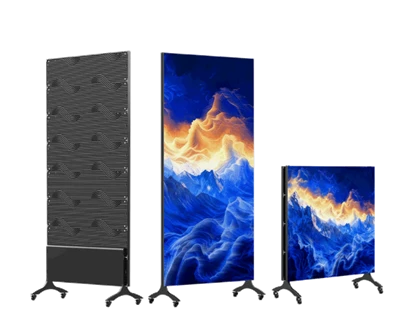
And if you’re not sure? That’s what I’m here for. I’ve installed over 2,000 LCD showcases across the country, and I’ve seen every use case. I can help you figure out exactly what resolution works for your space, your products, and your budget, no sales pressure, just straight talk.
Creative LED Display If you’re ready to upgrade your displays, or just have more questions about resolution, feel free to reach out. We’ll put together a custom solution that fits your needs, no fine print, no overpriced add-ons.
References
- Digital Imaging Group. Display Resolution and Perceptual Sharpness for Retail Environments. 2022.
- Display Supply Chain Consultants. Global LCD Showcase Market Report: Resolution and Application Trends. 2023.
- International Organization for Standardization. ISO 13406-2: Ergonomic requirements for work with visual displays based on liquid crystal displays (LCDs). 2018.
- The Society for imaging Science and Technology. PPI and Viewing Distance: Optimal Resolution for Close-Proximity Displays. 2021.
Suzhou One World Technology Co., Ltd.
With abundant experience, we are one of the most professional lcd showcase manufacturers and suppliers in China. Please feel free to buy cheap lcd showcase for sale here from our factory. All customized products are with high quality and competitive price.
Address: Room 928, No.28 Wansheng Street, Suzhou Industrial Park, Suzhou, Jiangsu Province
E-mail: sales@oneworldtech.cn
WebSite: https://www.yishitongtech.com/
