As a supplier of JP standard plug pins, I’ve often been asked about the maximum power these plug pins can handle. This is a crucial question, not only for electrical engineers and designers but also for end – users who want to ensure the safety and efficiency of their electrical devices. In this blog, I’ll delve into the factors that determine the maximum power capacity of JP standard plug pins, the standards they adhere to, and why understanding this is vital. Jp Standard Plug Pin
Understanding JP Standard Plug Pins
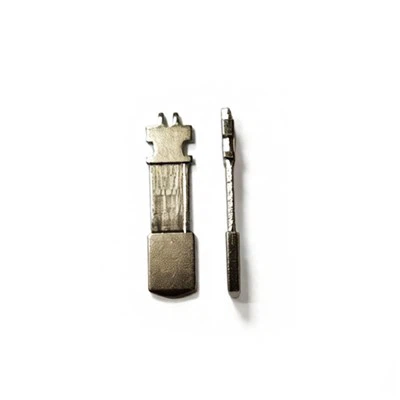
JP standard plug pins refer to the plug pins used in Japan. These plug pins are designed to fit into electrical outlets in Japan and comply with Japanese electrical standards. The most common type of JP plug has two flat prongs, and in some cases, there may be an additional grounding pin.
The design of these plug pins is based on the Japanese electrical grid, which operates at 100V with a frequency of 50Hz in the eastern part of Japan and 60Hz in the western part. This difference in frequency is important to note as it can affect the performance of electrical devices and, by extension, the power handling capacity of the plug pins.
Factors Affecting Power Handling Capacity
Material of the Plug Pins
The material used to manufacture the plug pins is a key factor in determining their power handling capacity. Most JP standard plug pins are made of high – quality copper or copper alloys. Copper is an excellent conductor of electricity due to its low electrical resistance. The lower the resistance of the plug pin, the less heat is generated when current flows through it.
When a large amount of current passes through a plug pin with high resistance, the heat generated can cause the plug pin to overheat. Overheating can lead to several problems, such as melting of the insulation around the plug pin, damage to the electrical outlet, and even pose a fire hazard. High – quality copper or copper alloys ensure that the plug pins can handle a relatively large amount of current without significant heat generation.
Cross – sectional Area
The cross – sectional area of the plug pin also plays a significant role in its power handling capacity. According to Ohm’s law (V = IR) and the power formula (P = VI), where V is voltage, I is current, and R is resistance, the resistance of a conductor is inversely proportional to its cross – sectional area (R = ρL/A, where ρ is the resistivity of the material, L is the length of the conductor, and A is the cross – sectional area).
A larger cross – sectional area means lower resistance, which allows more current to flow through the plug pin without excessive heat generation. Therefore, plug pins with a larger cross – sectional area can handle more power. In the case of JP standard plug pins, the cross – sectional area is carefully designed to meet the power requirements of common electrical devices used in Japan.
Contact Resistance
Contact resistance is another important factor. When the plug pin is inserted into the electrical outlet, there is a contact interface between the two. The quality of this contact can significantly affect the power handling capacity. A poor contact can result in high contact resistance, which in turn leads to more heat generation.
For JP standard plug pins, the design and manufacturing process aim to minimize contact resistance. This includes ensuring proper surface finish of the plug pins, accurate dimensional tolerances, and the use of spring – loaded contacts in the outlet to ensure a tight fit.
Japanese Electrical Standards and Power Ratings
Japan has strict electrical standards to ensure the safety and performance of electrical products. The Japanese Industrial Standards (JIS) set the requirements for JP standard plug pins. These standards specify the dimensions, materials, and electrical properties of the plug pins.
In general, the maximum power that a standard JP two – prong plug pin can handle is limited by the amperage rating. The most common amperage ratings for JP plug pins are 15A and 20A. At a voltage of 100V, a 15A plug pin can handle a maximum power of P = VI = 100V×15A = 1500W, and a 20A plug pin can handle a maximum power of P = VI = 100V×20A = 2000W.
However, it’s important to note that these are theoretical maximum values. In real – world applications, it’s recommended to operate below these maximum ratings to ensure safety and prevent overheating. For example, if you are using a high – power electrical device such as an electric heater, it’s advisable to use a plug pin with a higher amperage rating and to make sure that the total power consumption of all the devices connected to the same circuit does not exceed the rated capacity of the plug pin and the circuit breaker.
Importance of Knowing the Maximum Power Capacity
Safety
Safety is the most important reason for understanding the maximum power capacity of JP standard plug pins. Overloading a plug pin can cause overheating, which can lead to electrical fires, damage to electrical devices, and even endanger human lives. By knowing the maximum power that a plug pin can handle, users can ensure that they do not connect devices with a total power consumption that exceeds the plug pin’s capacity.
Device Performance
Using a plug pin with an appropriate power handling capacity is also crucial for the proper performance of electrical devices. If a device is connected to a plug pin that cannot handle its power requirements, the voltage supplied to the device may drop, causing the device to operate inefficiently or even malfunction.
Case Studies
Let’s consider a few case studies to illustrate the importance of understanding the power handling capacity of JP standard plug pins.
Case 1: Home Appliance Usage
In a typical Japanese household, there are many electrical appliances such as refrigerators, televisions, and air – conditioners. A refrigerator may consume around 100 – 200W of power, a television around 50 – 100W, and a small air – conditioner around 500 – 1000W. If all these devices are connected to a single outlet with a 15A (1500W) plug pin, it’s important to ensure that the total power consumption does not exceed 1500W. Otherwise, overheating may occur, leading to potential safety hazards.
Case 2: Industrial Application
In an industrial setting, electrical equipment may have much higher power requirements. For example, a machine tool may require a large amount of power to operate. In this case, using a plug pin with an appropriate power rating is essential. If a machine tool with a power consumption of 2500W is connected to a 15A (1500W) plug pin, it will cause the plug pin to overheat rapidly, potentially damaging the machine tool and causing a fire.
As a Supplier, Our Commitment
As a supplier of JP standard plug pins, we are committed to providing high – quality products that meet or exceed Japanese electrical standards. Our manufacturing process ensures that the plug pins have the right material, cross – sectional area, and contact resistance to handle the specified power ratings safely.
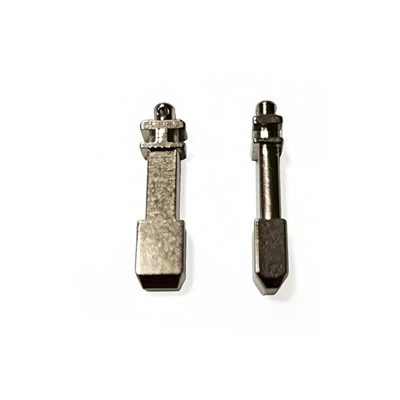
We conduct rigorous quality control tests on all our plug pins. These tests include checking the electrical conductivity, dimensional accuracy, and contact resistance. We also ensure that our products are environmentally friendly and comply with all relevant regulations.
Contact Us for Procurement
Us Standard Plug Pin If you are in the market for high – quality JP standard plug pins, we invite you to reach out to us for procurement discussions. Whether you are an electrical equipment manufacturer, a distributor, or an end – user with specific power requirements, we can provide you with the right plug pins for your needs. We have a wide range of plug pins available in different amperage ratings and configurations to meet the diverse needs of our customers.
References
- Japanese Industrial Standards (JIS) for electrical plugs and sockets.
- Electrical engineering textbooks on power distribution and electrical safety.
- Technical reports on the performance of electrical conductors and connectors.
Dongguan Fangrun Metal Products Co., Ltd.
We’re well-known as one of the leading jp standard plug pin manufacturers in China, specialized in providing high quality customized products. Please feel free to buy discount jp standard plug pin made in China here from our factory. For quotation and free sample, contact us now.
Address: New Town Industrial Zone,Xiegang Village,Xie Gang Town,Dongguan City
E-mail: 825556703@qq.com
WebSite: https://www.fangrunpin.com/
