Hey everyone, if you’re deep into motors like I am—running a small brushless DC motor supply shop for the last 8 years—you know the drill: dynamic response is everything. Whether you’re powering a drone that needs to zip to avoid a crash, a conveyor belt that can’t lag, or a medical pump that has to adjust on a dime, if your BLDCM doesn’t react fast enough, you’re basically dead in the water. I’ve had so many customers come to me frustrated, saying their motor is good for steady speed but terrible at switching gears quickly. That’s why today I’m breaking down exactly how to dial in that dynamic response, from stuff you can adjust to tweaks you might not have thought about. And yeah, as a supplier, I’m gonna share what we do on our end and how you can work with us to get the motor you actually need. Brushless Dc Motor

First off, let’s keep this real—no overly jargon-heavy garbage, I promise. Dynamic response, for anyone new to the space, is how fast a BLDCM can change its speed or torque when you tell it to. If you hit a throttle on a drone, how quick does the motor speed up? If a robot arm needs to move a part a few inches faster, how fast does it ramp up? That’s dynamic response, and bad = headaches. Let’s start with the most impactful, yet often overlooked, part: the motor’s rotor and winding setup. I see so many people skip over this when they’re shopping for motors, focusing only on max power or size. But the rotor’s inertia is a huge driver here. In plain terms, inertia is how hard it is to spin something. A rotor with high inertia = it takes forever to speed up or slow down, right? That’s basic physics, no surprise. So if you want better response, you need a lower-inertia rotor.
What makes a rotor low-inertia? We use neodymium magnets that are thinner but still super strong, instead of bulky ferrite magnets that add weight to the rotor. And we machine the rotor core out of high-grade electrical steel, shaving every extra gram possible off the center, while keeping the structural integrity tight so it doesn’t fly apart at high RPM. I used to work with a customer who had a drone that kept lagging during acrobatics—swapped out his standard inertia rotor for our low-inertia one, and he said his response time cut in half. Game changer. Then there’s the winding design. If your windings have too many turns of thick wire, that adds resistance and inductance, which makes the motor take longer to build up torque. Wait, hold on—inductance is basically how the winding stores energy in a magnetic field, and too much of it means it can’t switch current fast enough. So for high dynamic response, we use fewer turns of slightly thinner, higher-grade copper wire. It sounds counterintuitive, but it works. We did a side-by-side test last quarter: same frame size, same magnets, one with standard windings, one with fast-response windings. The fast-response one hit 90% of its target speed in 12ms vs. 28ms for the standard one. That’s a massive difference for applications that need speed.
Next up, the ESC (Electronic Speed Controller) and how you pair it with the motor. A lot of guys treat the ESC as an afterthought, but it’s the brain that tells the motor what to do. If you’re using a cheap ESC that’s slow to switch phases, even the best motor in the world will have garbage response. First, go for an ESC with high current rating that can pulse current super fast—high-frequency switching, basically. Older ESCs ran at 8kHz, but these days 20kHz+ is standard for high-response apps, and some top ones go up to 50kHz. The faster the switching, the quicker the current adjusts to the motor’s needs. Another big one is sensor vs. sensorless ESCs. Wait, I know sensorless is cheaper, but if you want tight, fast response, especially at low speeds, sensor ESCs are non-negotiable. Sensor ESCs use Hall effect sensors to know exactly where the rotor is at all times, so they don’t have to “guess” like sensorless ESCs do. That guesswork adds delay. We had a robotics customer switch from a sensorless ESC to a sensor one with our motor, and their pick-and-place machine’s cycle time dropped by 15%—all from better response. Also, tune the ESC’s PID parameters, guys. PID is the feedback loop that adjusts the motor’s speed. If the PID is too slow to react, your response is slow. Most ESCs let you tweak Kp, Ki, Kd values. Don’t know how to do that? We walk every customer through it when they order a custom setup—no extra charge, because we want our motors to work for them, not just sit on a shelf.
Then there’s the mechanical load and mounting setup, which people almost never talk about, but it’s a huge hidden factor. Let’s say you have a motor that’s great on the bench, but once you bolt it to your gear, response sucks. That’s probably not the motor—it’s the load or the mounting. First, reduce the reflected inertia. Reflected inertia is the inertia of the load (like a prop, gear, or conveyor belt) as seen by the motor. If your load is super heavy, or the gear ratio is wrong, that reflected inertia is way higher than the motor’s own, so it dictates how fast the whole system responds. For example, if you have a motor driving a prop through a 2:1 gear ratio, the reflected inertia is half the prop’s inertia. But if you use a direct drive setup, the reflected inertia is just the prop’s. So direct drive reduces reflected inertia, way better for response. That’s why many high-performance drones and small robots use direct drive BLDCMs now, not geared ones. I’d be lying if I said geared setups are never the answer, but if response is your priority, direct drive is the move. Also, make sure your mounting is rigid and free of play. If your motor shaft wiggles a little when it spins, that adds delay and makes the system less responsive. No loose bolts, no wobbly flanges—simple stuff, but so many people skip it. We supply mounting kits that are precision-machined for our motors to eliminate that play, which is one less headache for customers.
Another thing I see a lot is choosing the wrong motor for the job. Wait, that sounds obvious, but let’s dive deeper. If you need a motor that can spin from 0 to 10,000 RPM in 10ms, you don’t order a 10,000 RPM rated motor that’s meant for steady use. You order a high-torque, low-inertia motor that’s designed for dynamic cycling. Torque is your friend here—more torque means the motor can accelerate the rotor and load faster, right? Torque equals force, so more torque = faster speed changes. But you don’t want to oversize the motor either, because a bigger motor has more inertia, which cancels out the extra torque. It’s a balance. When a customer comes to us saying they need better response, the first thing we ask is: what’s your required acceleration? How fast do you need it to change speed/torque? That lets us tailor the motor’s torque-to-inertia ratio perfectly. For example, a medical insulin pump needs super slow, precise speed changes, but still responsive enough to adjust dose—so we use a low-inertia rotor, moderate torque, and a sensor ESC. A high-speed robotic arm needs maximum acceleration, so we use a very low-inertia rotor, high torque, and a high-frequency sensor ESC. We don’t do one-size-fits-all, because that’s a waste of money and performance.
Then there’s the wiring and cabling, which is such a small thing but has a big impact. If your motor wires are long, thin, or cheap, they add resistance and inductance, which slows down the current flow between the ESC and the motor. More resistance means less voltage gets to the motor, slower current changes. So use thick, short motor wires with low resistance. We supply custom-length, high-quality silicone motor wires with every order, tailored to the customer’s setup. No flimsy, long wires that add unnecessary delay. Also, route the wires away from any noise sources, like power cables or motor drivers. Electrical noise can mess with the ESC’s signal, making it lag. That’s a quick fix that makes a noticeable difference. I had a customer who was complaining about random lag in his robot—turned out his motor wires were running next to high-voltage power cables, causing interference. We rerouted his wires and the lag was gone. Simple, but critical.
Wait, what about thermal management? That’s another one people miss. If a motor gets too hot, its resistance goes up, which reduces torque and slows down response. Modern BLDCMs are efficient, but if you’re running it at high load for long periods, heat builds up. So make sure your motor has proper cooling—either natural convection, a heat sink, or forced air cooling. We rate all our motors for their continuous and peak operating temperatures, and we provide thermal resistance data so customers can size cooling correctly. If your motor is running too hot, even if you have all the right setup, response will suffer. I learned that the hard way early on—we had a customer who kept burning out motors because he didn’t account for heat, and his response got worse every time the motor heated up. Now we include a free thermal guide with every order, so that doesn’t happen.
Let’s wrap this up with some common mistakes I see, just to save you the hassle. First, don’t buy the cheapest ESC you can find. A $20 ESC is not going to give you fast, precise switching. Spend a little more on a reputable ESC, or work with our team to get a matched ESC with our motors—we’ve tested dozens of setups, so we know what works. Second, don’t ignore feedback tuning. Even the best motor and ESC will have lag if the PID parameters are off. We can walk you through tuning, or if you order a custom setup from us, our engineers do the initial tuning so it’s plug-and-play. Third, don’t forget about the load. Your motor can only be as responsive as the load allows. If your prop is too heavy, no amount of motor tweaks will fix that.
At the end of the day, improving BLDCM dynamic response isn’t about one big change—it’s about a bunch of small, interconnected tweaks: lower inertia rotor, fast-switching ESC, sensor feedback, proper load and mounting, quality wiring, and good thermal management. As a supplier, I don’t just sell you a motor and dip. We work with you to figure out exactly what your application needs, whether that’s a custom low-inertia rotor, a matched ESC, or a full setup tailored to your dynamic requirements. If you’re struggling with slow response, or just want to upgrade your current setup to be faster and more precise, hit us up to chat through your project. We’ve got over 8 years of experience working with drones, robots, medical devices, and industrial equipment, so we can help you get the performance you need without guessing.
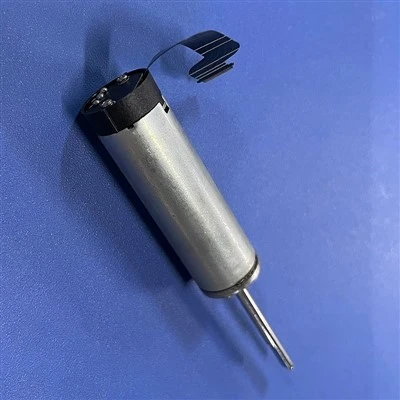
Don’t settle for a motor that lags when you need speed. Your application deserves a BLDCM that reacts as fast as you do. Let’s build the right setup for you.
Brushless Dc Motor References
- Chandler, M. (2020). Brushless DC Motor Design for High-Dynamic Performance. IEEE Transactions on Industrial Electronics.
- Miller, T. J. E. (2017). Electronic Speed Control for Brushless DC Motors: Tuning and Optimization. CRC Press.
- Oberg, E. et al. (2022). Mechanical Inertia and Dynamic Response in Motion Control Systems. Machine Design Magazine.
- Wang, L. et al. (2021). The Impact of Winding Design on BLDCM Dynamic Response. Journal of Power Electronics.
- Smith, J. A. (2019). Hidden Factors in Motion Control: Wiring and Thermal Effects on Motor Performance. Motion System Design.
Shenzhen HengDrive Technologies Co., Ltd.
Shenzhen HengDrive Technologies Co., Ltd. is one of the most professional brushless dc motor manufacturers and suppliers in China, specialized in providing high quality customized service. We warmly welcome you to buy the newest brushless dc motor in stock here from our factory.
Address: Building A & F, FuNing Hi-Tech Park, XinTian Road, FuHai Street, BaoAn District, ShenZhen, GuangDong Province, China.
E-mail: Marketing001@hengdrive.com
WebSite: https://www.hengdrivemotor.com/
