If you’ve ever held a length of smooth, uniform plastic pipe, a lightweight aluminum window frame, or even a flexible food packaging film, you’ve been the end result of a process called extrusion. But what most people don’t talk about—what’s often hidden behind the machines and the raw materials—is the unsung hero of every consistent extruded part: the extrusion die flow channel. As an extrusion die supplier who’s worked with shops ranging from small custom fabricators to large multinational manufacturers for over a decade, I can tell you this: the flow channel isn’t just a hollow space inside a die. It’s the part that makes or breaks whether a product is usable, cost-effective, and up to specification. Extrusion Dies

Let’s start with the basics, plain and simple. An extrusion die is a metal tool—usually made from high-grade tool steel, hard chrome-plated for durability, and precision-machined to tight tolerances—that shapes molten material (most commonly plastic, aluminum, or copper) into a continuous profile. The flow channel is the internal, machined path inside this die that guides the molten material from where it enters the die to the opening that forms the final part. It’s not a one-size-fits-all hole, either. A flow channel is custom-designed for every single profile, because even a tiny mismatch in its shape, surface finish, or transition points can lead to uneven flow, defects, or wasted material.
Here’s where most first-time extruders go wrong: they think the die’s opening is the critical part, but the flow channel is actually the foundation. Let’s use a common example to explain. If you’re making a PVC window profile, you want the final part to have consistent wall thickness along its entire length, no warping after it cools, and no ripples on the surface. If the flow channel is too narrow in one section, molten plastic will move faster there than in a wider section, leading to thin walls or even gaps. If there’s a sharp corner in the channel instead of a smooth, rounded transition, the material will shear as it turns, creating internal stress that causes the profile to twist or bow after extrusion. That’s why, over the years, I’ve worked with clients who wasted thousands of pounds of raw material and dozens of hours of downtime because they skipped custom flow channel machining to save a few dollars on a cheaper die.
The science behind the flow channel is rooted in polymer or metal flow dynamics, a field we’ve refined over decades of working with different materials. Molten extrusion materials behave like non-Newtonian fluids—meaning their viscosity (thickness) changes under pressure and shear rate, unlike water, which has a consistent viscosity. For thermoplastics, like HDPE used for pipe or PET used for packaging, shear rate increases as the material moves through narrower parts of the flow channel. Too much shear can degrade the material, leading to discoloration, brittleness, or surface flaws. For aluminum extrusion, which involves hot, semi-solid metal, the flow channel has to withstand much higher temperatures and pressure than plastic dies, so its design has to account for thermal expansion to avoid pinching the material as it flows.
Let’s break down the key components of a typical extrusion die flow channel to make it concrete. First, there’s the entrance region, where material is fed from the extruder’s barrel into the die. This is usually a large, rounded opening to slow the material down slightly and distribute it evenly before it enters the narrowing part of the channel. Next is the land region, the long, straight, constant-width section of the channel just before the die’s final opening. The land is critical: it ensures the material has enough dwell time to stabilize its flow, so the profile dimensions are consistent. Finally, there’s the bearing, the actual opening that shapes the final part, which is machined to match the profile’s exact dimensions, but only after the flow channel has guided the material to be uniform.
A big part of our work as extrusion die suppliers is optimizing the flow channel for specific materials and production volumes. For example, if a customer is running a high-volume line for plastic drinking straws, we design a flow channel with a very smooth, polished surface to minimize friction, which allows for faster production and less material waste. For a custom medical profile, where even a 0.1mm variation in wall thickness can render the part unfit for use, we use computer-aided design (CAD) and finite element analysis (FEA) software to map every point of the flow, predicting where shear stress might be too high and adjusting the channel accordingly. We also test prototype flow channels with small batches of material before full production, because even the best FEA model can’t account for subtle variations in material grade or extruder conditions.
Another common misconception is that flow channels don’t need maintenance. But over time, as molten material flows through, it can leave behind residue, or the die can wear, leading to rough surfaces in the channel that cause uneven flow. I’ve had clients come to us with dies that ran perfectly for two years, then started producing warped profiles, only to find that the flow channel had developed micro-scratches from repeated use. Regular polishing and flow channel inspections—we offer these as a service to all our customers—can extend a die’s life by years and maintain consistent part quality.
We also work with clients who are switching from one material to another, and the flow channel is the first thing we adjust. A die that works for extruding ABS plastic won’t work for polypropylene, because each material has a different melt viscosity and flow behavior. Trying to run polypropylene through an ABS die without modifying the flow channel will almost certainly result in inconsistent profiles, excessive waste, or even die damage. That’s why we don’t just sell dies—we collaborate with clients to analyze their material, production speed, and part requirements to design a flow channel that’s tailored to their exact needs.
From a practical standpoint, the flow channel also impacts production costs. A well-designed flow channel minimizes scrap: if your die guides material evenly, you’ll have far fewer bad parts that you have to rework or discard. I once worked with a small fabricator who was spending 15% of their raw material budget on scrap because their old die had a poorly designed flow channel. After we re-machined the flow channel to optimize flow, their scrap rate dropped to 2%, saving them over $20,000 a year in material costs alone. That’s the kind of impact a good flow channel can have on a bottom line.
Now, let’s talk about what sets our approach apart from other extrusion die suppliers. A lot of companies will offer a standard die design for common profiles, but we don’t do that. We understand that every extrusion line is different—even two lines producing the same window profile might run at different speeds, use slightly different material grades, or have different cooling systems. That’s why every flow channel we design is custom, with input from our customers’ production teams. We also use only precision CNC machining and hand-polishing for flow channels, because machine surfaces can have tiny imperfections that affect flow, and hand-polishing ensures a uniform, smooth surface that reduces friction and material buildup.
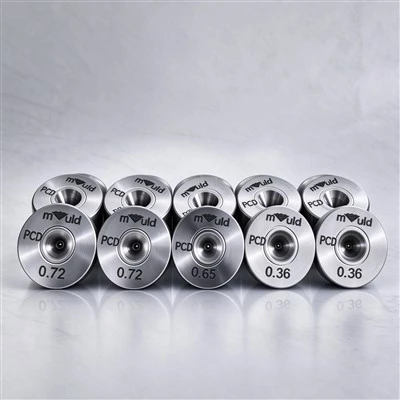
If you’re a manufacturer who’s been struggling with inconsistent extruded parts, high scrap rates, or frequent die failures, the first place to look isn’t the raw material or the extruder machine—it’s the flow channel. It’s the quiet, essential part that makes every other step of the extrusion process work. For over 15 years, we’ve helped hundreds of customers refine their flow channels to improve part quality, cut costs, and increase production speed. Whether you’re new to extrusion and need guidance on die design, or you’re an experienced fabricator looking to upgrade your current tooling, we’re here to help.
PCD Dies When you’re ready to explore how a custom flow channel can improve your extrusion process, we’re ready to work with you. We offer free, no-obligation consultations where we can review your part specifications, production needs, and current challenges, and help you design a die that meets your goals. Don’t let hidden flaws in your flow channel hold your production back.
References
- Rauwendaal, C. (2014). Polymer Extrusion (5th ed.). Hanser Publishers.
- Broadbent, J. M. (2006). Extrusion Dies for Plastics and Rubber: Design and Engineering Computations (2nd ed.). Hanser Gardner Publications.
- Ecker, O., & Münker, K. (2018). Aluminum Extrusion: Technology, Applications, and Modeling. Springer.
Hejian Strains Of Hard Alloy Mould Co., Ltd.
As one of the most professional extrusion dies manufacturers and suppliers in China, we’re featured by quality products and good service. Please rest assured to wholesale durable extrusion dies made in China here from our factory. Also, custom service is available.
Address: Tangzhuang Industrial Park, Hejian City, Hebei Province
E-mail: limei@mouldzy.com
WebSite: https://www.mouldzy.com/
