When you walk past heavy machinery on a construction site, load a shipping container at a port, or start an old pickup truck on a crisp morning, you’re interacting with cast iron parts. As a supplier of alloy cast iron parts, I’ve spent more than 15 years standing in our foundry, monitoring every step of the melting, alloying, and casting process that turns raw iron into components that hold up under conditions that would break most other metals. One question I get asked all the time—by engineers, procurement managers, even other foundry workers—is: what exactly are those alloying elements we add to cast iron to make it work for specific parts? Alloy Cast Iron Parts

Let me start with the basics. Plain cast iron is mostly iron, with carbon content between 2 and 4 percent, plus small amounts of silicon, manganese, sulfur, and phosphorus. It’s cheap, easy to cast into complex shapes, and has good vibration damping, but it’s also brittle, prone to rust, and soft enough to wear out fast when under heavy load. That’s where alloying comes in. We add elements in controlled amounts to tweak cast iron’s strength, hardness, corrosion resistance, heat resistance, or machinability—depending on what the part is supposed to do. I’ll break down the most common alloying elements we use, why we use them, and what parts they end up in, because for us, it’s never just about adding metal; it’s about making a part that our customer can rely on for years.
The Workhorse Alloy: Chromium
Chromium is the first element I reach for when we need cast iron that won’t wear down, even when it’s rubbing against other hard materials. For our customers, that means parts like pump impellers, crusher hammers, and valve seats in oil and gas equipment. Let me explain how it works. Chromium combines with carbon in the molten iron to form tiny, hard chromium carbide particles, scattered evenly through the iron’s matrix. Those particles act like little pebbles in concrete—they stop abrasive wear before it can damage the softer iron around it.
When I first started in the foundry, we only added about 1 percent chromium for basic wear resistance, but today, most of our wear-resistant cast iron has between 10 and 30 percent chromium. Wait, that’s a big jump, and it’s not just for show. For example, when we cast a mill liner for a gold mining operation, we add 25 percent chromium. That liner is inside a mill that crushes rock the size of a basketball into fine powder, running 24 hours a day, 7 days a week. Without that high chromium content, the liner would wear out in a matter of weeks, costing our customer thousands in downtime and replacement parts.
We also use chromium to improve corrosion resistance. A lot of people know chromium from stainless steel, and the same principle applies here. When we add 12 percent or more chromium to cast iron, it forms a thin, invisible oxide layer on the surface that keeps oxygen and moisture from getting to the iron underneath. That’s why we make corrosion-resistant cast iron valve bodies for marine engines and chemical processing equipment. The catch with chromium, though, is that too much of it can make the cast iron hard and brittle, so we always balance it with other elements like nickel or molybdenum to keep it tough enough to handle impact.
Making It Strong and Tough: Molybdenum
Next up is molybdenum, an element that works behind the scenes to fix two of cast iron’s biggest weaknesses: its tendency to form large, weak graphite flakes, and its poor performance at high temperatures. For parts that need to hold up under heat—like engine cylinder heads, exhaust manifolds, and furnace components—molybdenum is non-negotiable.
Let’s talk about engine cylinder heads, for example. A cylinder head sits on top of an engine’s block, sealing the combustion chambers, and it has to handle temperatures of up to 1,800 degrees Fahrenheit from the burning fuel, plus the stress of tightening down the head bolts and the pressure of the combustion itself. Plain cast iron would warp or crack under that kind of heat and pressure. When we add 0.2 to 0.5 percent molybdenum to our cast iron for cylinder heads, it does a few things: first, it refines the graphite structure, turning those large, weak flakes into smaller, more dispersed ones that are less likely to cause cracks. Second, it strengthens the iron’s matrix, so it doesn’t stretch or warp when it gets hot. Third, it raises the temperature at which the iron starts to soften, so it stays rigid even under extreme heat.
I remember a few years back, we had a customer who was having issues with their exhaust manifolds cracking after just a few months of use. They were using standard ductile iron, which is good for a lot of things, but not for consistent high heat. We switched them to a molybdenum-alloyed cast iron with a little added silicon, and their manifold life tripled. The key is not to overdo molybdenum, though. We never go above 1 percent for most automotive parts, because too much molybdenum can make the cast iron hard to machine, which would add unnecessary cost for our customer. We always test small batches first to get the ratio just right.
Boosting Toughness and Corrosion Resistance: Nickel
Nickel is another staple in our alloy shop, and it’s all about balance. Nickel doesn’t form hard carbides like chromium, and it doesn’t raise high-temperature strength like molybdenum—instead, it makes cast iron tougher, more ductile, and more resistant to corrosion. We add nickel for parts that need to handle both stress and a little bit of environmental exposure, like gear housings, crankshafts, and agricultural equipment parts.
Crankshafts are a perfect example. A crankshaft has to transfer thousands of pounds of force from the pistons to the transmission, spinning at high speed for millions of revolutions over its life. If the cast iron is too brittle, it will snap under pressure. If it’s too soft, it will wear down at the bearings. Nickel changes that. When we add 1 to 4 percent nickel to ductile iron, it stabilizes the iron’s crystal structure, making the graphite nodules more uniform and evenly distributed. That makes the crankshaft tougher—less likely to crack or break under impact—while still keeping it hard enough to resist wear at the bearing surfaces.
Nickel also improves corrosion resistance, though not as well as chromium. For agricultural equipment, like plow shares or tractor axle housings, we often add a small amount of nickel along with chromium. The nickel makes the part tough enough to dig into rocky soil, and the chromium keeps it from rusting after sitting in a field for months between uses. We’ve even used nickel in cast iron parts for marine applications, like small boat propellers, paired with a little copper to boost saltwater resistance. The downside of nickel? It’s more expensive than chromium or molybdenum, so we only add as much as we need. That’s where our experience comes in—we know exactly how much nickel to use for each part, so our customers don’t pay for more than they need.
The Silent Stabilizer: Silicon
You might not hear a lot about silicon when people talk about alloying cast iron, but it’s the element that makes cast iron actually work. Wait, hold on—plain cast iron has silicon, right? Yes, but we add extra silicon when we need specific properties. Silicon is the main element that controls graphite formation in cast iron. If there’s too little silicon, the iron forms hard, brittle cementite instead of soft, machinable graphite. If there’s too much, it can make the iron too brittle. But when we add controlled amounts of extra silicon—usually between 1 and 3 percent—we get some really useful properties.
Silicon is a huge help for high-temperature resistance. For furnace grates, stove burners, and incinerator parts, we add 2 to 3 percent silicon. Silicon oxidizes easily, forming a protective layer on the surface of the iron that keeps oxygen from attacking the iron at high temperatures. That’s why those old wood-burning stoves last for decades—their cast iron grates have high silicon content. Silicon also improves machinability in some cases, because it makes the graphite particles a little more uniform, so the tool bits don’t have to work as hard to cut through the part. We’ve used high-silicon cast iron for parts in glass manufacturing equipment, where they have to handle both high heat and constant machining from cutting glass.
Specialized Elements for Specialized Jobs
Sometimes, the parts we get orders for have really specific needs, so we reach for more specialized alloying elements. Let’s say a customer needs a cast iron piston for a diesel engine that runs at 3,000 psi of combustion pressure. We’ll add a small amount of vanadium, usually less than 0.2 percent. Vanadium forms tiny vanadium carbide particles that add extra strength at high temperatures, so the piston doesn’t deform under pressure. For parts that are going to be exposed to acids, like chemical pumps, we’ll add copper and tin. Copper forms a protective oxide layer, and tin boosts resistance to acidic environments, so the pump won’t corrode even when handling harsh chemicals.
We also use magnesium for ductile iron, which is one of the most common alloyed cast irons we make. Wait, magnesium—yes, it’s not just for other alloys. Adding a small amount of magnesium (around 0.04 percent) to molten cast iron turns the graphite flakes into round nodules, making the iron way tougher and more ductile than gray cast iron. Ductile iron is used for everything from water pipe fittings to wind turbine gear housings, because it balances the castability of cast iron with the strength of steel.
Why It Matters for Our Customers
As a supplier, I don’t just mix elements willy-nilly. Every alloy we choose is based on what the part has to do. If a customer needs a cheap pump housing for a residential water system, we might use low-alloy cast iron with just a little chromium to resist rust. If they need a crusher hammer for a mining operation that runs 24/7, we’re using high-chromium cast iron with extra molybdenum to stand up to constant abrasive wear.
I’ve seen too many customers make the mistake of choosing a generic cast iron part because it’s cheaper, only to end up paying for downtime, replacements, and lost productivity. That’s why we take the time to talk to each customer: What’s the part going to be used for? What environment will it operate in? What kind of stress will it face? Then we pick the right alloying elements to make a part that lasts.
A few years ago, we had a customer in the construction industry who was using imported cast iron bucket teeth for their excavators. Those teeth would wear down in about two weeks, even though they were supposed to last a month. We worked with them to adjust the alloy: we added 18 percent chromium instead of the 10 percent they were using, and a small amount of nickel to keep the tooth tough enough to dig in rocky soil. The result? The teeth now last six weeks, cutting their replacement costs by half and reducing the time they spend on the job changing parts. That’s the kind of result that matters to our customers, and it all starts with choosing the right alloying elements.
Wrapping It Up
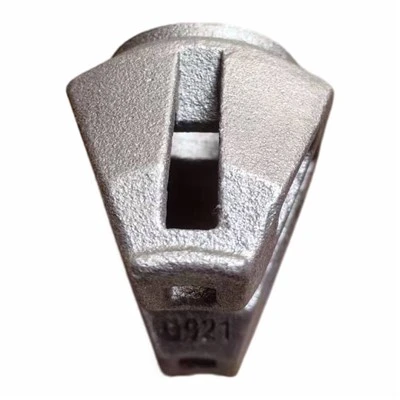
At the end of the day, cast iron’s versatility comes from its ability to be modified with just the right mix of alloying elements. Chromium for wear and corrosion, molybdenum for high-temperature strength, nickel for toughness, silicon for heat resistance, and specialized elements for niche applications—each plays a critical role in turning raw iron into a part that works. As a supplier, our job is to know when to use each element, how much to add, and how to balance them so the part is strong, durable, and cost-effective.
Alloy Cast Iron Parts If you’re looking for alloy cast iron parts that are made to perform for your specific application, we have the experience and expertise to help. We work with customers across industries, from automotive to mining to marine, to design and cast parts that meet their exact needs. Reach out to us to discuss your project, and we’ll help you find the right alloy for your parts that will stand up to whatever conditions you throw at them.
References
- Campbell, J. (2015). Castings, 2nd Edition. Butterworth-Heinemann.
- Davis, J. R. (Ed.). (1996). Cast Irons: ASM Specialty Handbook. ASM International.
- Steinberg, D. J. (2000). Principles of Alloying and Heat Treatment of Cast Irons. CRC Press.
Sangroove (Jiangsu) Machinery Co., Ltd.
Sangroove (Jiangsu) Machinery Co., Ltd. is one of the most professional alloy cast iron parts manufacturers and suppliers in China, also supports customized service with low price. Please feel free to wholesale cheap alloy cast iron parts in stock here from our factory. Also, pricelist is available.
Address: No.789, Hengyang South Road, Jinhu County, Huai’an City, Jiangsu Province
E-mail: quote@sangroove.com
WebSite: https://www.sangoh.com/
