If you’ve ever worked in quarrying, mining, recycling, or any industry that relies on separating materials by size, you’ve probably crossed paths with pu screen mesh. And if you’re shopping around for this product, one of the first questions you’ll ask is the tensile strength of pu screen mesh—because this number isn’t just a random spec on a data sheet; it’s what keeps your screening operations running, no matter how tough the materials you’re processing are. As a pu screen mesh supplier with 12 years in this business, I’ve answered this question hundreds of times, and I’ve learned that most people don’t just want a generic number. They want context: how tensile strength is tested, what factors affect it, why it matters for their specific application, and what makes a high-quality pu screen mesh different from a cheap one. Let me break it down, straight talk style, no jargon that doesn’t matter. Pu Screen Mesh
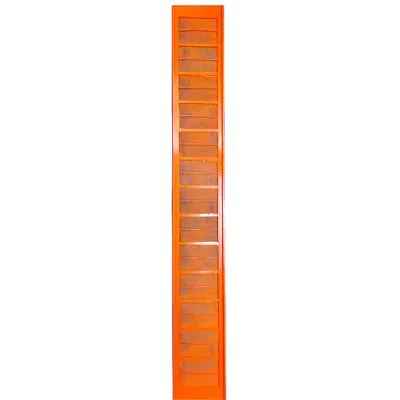
First, let’s get one thing clear: tensile strength isn’t a single, universal number for all pu screen mesh. That’s a mistake a lot of suppliers make—they throw a single “average tensile strength” out there and call it a day, but the truth is, pu screen mesh (also called polyurethane screen mesh) is tailored for different jobs, and its tensile strength changes based on how it’s made, what grade of polyurethane is used, and even the size of the mesh itself. For context, tensile strength, in simple terms, is the maximum amount of pulling force a material can take before it breaks or tears. If a screen mesh has a high tensile strength, it won’t stretch, snap, or fray when you’re feeding heavy rock, scrap metal, or construction debris through it. If it’s low, you’ll be replacing screens every few weeks, which costs you downtime, labor, and money.
Now, let’s talk about how we actually measure this, because that’s where a lot of confusion comes in. The industry standard test for tensile strength in elastomers like polyurethane is ASTM D412. This test uses a small, standardized sample of the mesh material (usually a dumbbell-shaped piece, not the full mesh screen) pulled at a constant speed until it breaks. The result is measured in megapascals (MPa) or sometimes pounds per square inch (PSI). For pu screen mesh specifically, the typical range you’ll see from reputable manufacturers is 30 MPa to 55 MPa. Wait, that’s a big range, right? So why such a gap?
It all comes down to the polyurethane formula. Polyurethane is a polymer, and suppliers can tweak the formulation—adjusting the ratio of isocyanates, polyols, and additives—to make it harder, stiffer, or more flexible. For example, a pu screen mesh designed for fine screening (sizing small particles, like sand or gravel) tends to be softer, with a tensile strength around 30 MPa to 35 MPa. That’s not because it’s low quality; it’s because flexibility is important for fine screens—they need to bounce or vibrate to get small particles through the holes without clogging. On the other end of the spectrum, pu screen mesh for heavy-duty applications—like scalping large, sharp rock in primary crushing stages, or separating dense scrap metal—uses a harder polyurethane formula with tensile strength of 45 MPa to 55 MPa. This material is stiffer, resistant to abrasion, and can handle the massive pulling and impact force from heavy materials without tearing. A lot of new operators don’t realize that picking the wrong tensile strength for their job is just as bad as buying a low-quality mesh. I’ve seen a mine that used 35 MPa mesh for scalping 12-inch rock—they were replacing screens every 3 weeks, at a cost of $15,000 a pop. Once they switched to 50 MPa heavy-duty mesh, that number dropped to one replacement every 6 months. That’s the kind of real-world impact tensile strength has.
Another factor that affects tensile strength is the mesh’s construction. You might have two pieces of polyurethane with the same base formula, but if one is a woven pu screen mesh and the other is a molded (or cast) pu screen mesh, their tensile strength will differ. Woven pu screen mesh is made by weaving polyurethane threads together, similar to fabric. This type tends to have slightly lower tensile strength than molded mesh, usually around 35 MPa to 45 MPa, because the woven joints are a weak point—they can split under heavy pulling. But woven mesh has its place: it’s lighter, easier to custom cut, and works well for medium-duty screening. Molded pu screen mesh, on the other hand, is a solid piece of polyurethane, with no woven joints, so its tensile strength is higher—ranging from 40 MPa to 55 MPa, depending on the grade. The solid construction of molded mesh means it can handle more force, resist tearing at the edges, and last longer in harsh conditions. We get a lot of requests for molded mesh from demolition companies that process sharp, jagged concrete and rebar—nothing stands up to that like high-tensile molded pu screen mesh.
Wait, there’s a third factor that almost no one mentions: the mesh’s hole size and wire (or bar) thickness. A pu screen mesh with 1mm holes and thin strands will have a lower effective tensile strength than a mesh with 50mm holes and thick bars, even if they’re made from the same polyurethane formula. That’s because the thin strands are more likely to stretch or snap under load, while the thick bars can distribute force more evenly. I always tell customers to ask for tensile strength of the mesh material, not just the screen as a whole. A $100 mesh with a 50 MPa material rating will outlast a $70 mesh with a 40 MPa rating, no matter the size.
Now, let’s address a common myth about pu screen mesh tensile strength: some people think higher tensile strength always means better mesh. That’s not true, and it’s a mistake I see all the time. For example, a customer recently came to us asking for the highest tensile pu screen mesh we make, for a sand screening application. Our highest tensile is 55 MPa, but the mesh he was using before that had 30 MPa and still worked fine. When we tested a sample of our 55 MPa mesh alongside his old one, we found that the 55 MPa mesh was so stiff it didn’t vibrate enough to let sand pass through the holes—he was getting 20% less throughput. That’s the thing: tensile strength needs to match your application. If you use a material that’s too strong (too stiff) for your job, you’ll end up with poor screening efficiency, not longer screen life. The sweet spot is matching the tensile strength to the load, particle size, and vibration frequency of your screening equipment.
So, what should you look for when evaluating pu screen mesh tensile strength? First, work with a supplier that can tell you the specific tensile strength for the mesh you need, not a one-size-fits-all number. Reputable suppliers will have test data for each grade of mesh they sell, so don’t be afraid to ask for that. Second, match the tensile strength to your application. If you’re doing light, fine screening, 30 MPa to 40 MPa is more than enough, and it will give you better throughput. If you’re processing heavy, sharp materials, go for 45 MPa to 55 MPa. Third, check the construction: molded mesh is stronger than woven, so if you need maximum tensile strength, molded is the way to go.
As a pu screen mesh supplier, I’ve seen first-hand how the wrong tensile strength choice can cost a company thousands in downtime, and the right choice can save them that same amount. I’ve worked with small family-owned quarries and large international mining companies, and the one thing that’s consistent across all of them is that they don’t want to waste money on screens that don’t hold up. That’s why we never sell a mesh based on just tensile strength alone—we ask about their application, the materials they process, the size of the particles, and their screening equipment, then recommend the mesh with the exact tensile strength they need to get the job done right.
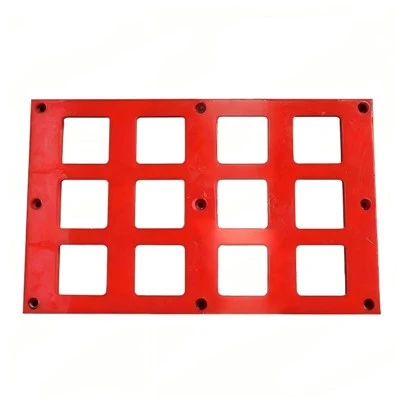
If you’re tired of replacing pu screen mesh every few weeks, if you’re dealing with frequent tears or fraying that’s slowing down your operation, or if you just want to make sure you’re getting the right product for the right price, we can help. We carry a full range of pu screen mesh with tensile strengths from 30 MPa to 55 MPa, in both woven and molded styles, custom sized to fit any screen equipment. Whether you’re in quarrying, mining, recycling, construction, or any industry that uses screen mesh, we’ll walk you through the specs, answer all your questions about tensile strength and more, and help you find a solution that cuts your costs and keeps your operations running smoothly. Reach out to our team today to discuss your needs and get a tailored quote for pu screen mesh.
Wear Resistant Parts References
ASTM D412-16, Standard Test Methods for Vulcanized Rubber and Thermoplastic Elastomers—Tension, ASTM International, West Conshohocken, PA, 2016.
Polyurethane Screen Mesh: Tensile Properties and Application Guidelines, Industrial Elastomers Association, 2021.
Tensile Strength Requirements for Aggregate Screening Screens, National Stone, Sand & Gravel Association, 2020.
Molded vs. Woven Polyurethane Screen Mesh: Performance Comparison, Journal of Materials Processing Technology, Vol. 289, 2021, pp. 116982.
Yangzhou Yaye Wire Mesh Manufacturing Co., Ltd.
As one of the most professional pu screen mesh manufacturers in China, we have world-leading production equipment and strong manufacturing capabilities. Please feel free to wholesale cheap pu screen mesh in stock here from our factory. Also, free sample is available.
Address: No. 1 Jiangjia Road, High-tech Industrial Park, Jiangdu District, Yangzhou City, Jiangsu Province
E-mail: 13952515577@163.com
WebSite: https://www.yayescreen.com/
