As a turbo expander supplier with over two decades of hands-on experience, I’ve lost count of the times our field technicians have gotten midnight calls from plant operators panicking about unplanned emergency shutdowns. In most cases, the shutdown could’ve been mitigated, or even prevented, with the right approach. Let me walk you through the step-by-step process we train our customers on—and the common missteps that turn a manageable issue into a costly emergency. Turbo Expander

First, let’s ground this in why turbo expanders matter. These workhorses are core to cryogenic air separation, natural gas processing, and petrochemical plants: they take high-pressure, high-temperature process gas, expand it through a rotating turbine wheel to generate power (for plant auxiliaries or grid export) and cool the gas to condensation temperatures. When they trip unexpectedly, it doesn’t just halt production—it can cause a domino effect: downstream separation units back up, pressure spikes in piping, and in extreme cases, damage to connected compressors or piping systems. That’s why knowing how to handle an emergency shutdown (ESD) properly is non-negotiable.
When your ESD alarm blares, the first 60 seconds are make-or-break. I’ve seen operators freeze, fumbling for the wrong shutdown valve or panicking because they don’t have a pre-written checklist. Our number one rule here: don’t ignore the alarm, but don’t act without context either. The first thing your team should do is cross-reference the HMI (Human-Machine Interface) logs against the alarm trigger. 9 times out of 10, ESDs are not random—they’re triggered by specific, measurable faults. The most common? Overspeed of the turbine rotor, low lube oil pressure, high process gas discharge temperature, or seal gas system failure.
Let’s break down each of these, because the response changes dramatically based on the root cause. For example, if the alarm points to overspeed: that’s a safety trip hardwired into most modern turbo expanders to prevent rotor burst. Your first action here is to engage the mechanical brake system immediately—do not manually throttle the gas inlet first, because a sudden valve closure can cause a reverse pressure spike that slams into the rotor, leading to structural damage. Our techs often see operators throttle the inlet in this scenario, and the result is a rotor that vibrates 2x its normal amplitude, requiring a full overhaul costing upwards of $150k. Instead, use the built-in brake: most of our units have a hydraulic brake that engages automatically on overspeed, but if it doesn’t, manual engagement is the next step. Once the rotor stops turning, lock out the energy source (close the inlet and outlet isolation valves) to prevent accidental gas flow, then wait 10 minutes for the rotor to cool before any inspection.
If the ESD is triggered by low lube oil pressure, the response is different, but just as time-sensitive. Turbo expanders rely on a pressurized oil film to separate the rotor from the bearing sleeves—without that, metal-on-metal contact will score the bearings, leading to catastrophic failure. The first step here is to check the lube oil system’s auxiliary pump: most units have a redundant pump that should kick in automatically at 20% below normal pressure. If it doesn’t, manually start it. If the pressure still doesn’t rise within 30 seconds, do not restart the main pump immediately. Why? A pressure drop often points to a failed oil filter, a clogged suction line strainer, or a leak in the oil header—forcing the main pump to run dry will burn out its impeller, adding another component to your repair bill. Our customers who follow this step avoid 70% of secondary lube oil system failures during ESD events.
Now, what if the alarm is for seal gas failure? Turbo expanders have dry gas seals to prevent process gas (often toxic, flammable, or corrosive) from leaking into the atmosphere. If the seal gas pressure drops, the ESD triggers to stop rotor movement before the seal is damaged. Here, the mistake we see most often is operators trying to restart the seal gas system while the rotor is still turning. Seal gas requires a consistent, filtered flow to maintain the pressure differential between the process side and the atmosphere side. If the rotor is spinning without seal gas, the seal faces will rub, creating scratches that require a full seal replacement. Instead, shut down the rotor completely, isolate the seal gas line, replace the filter cartridge, and test the seal pressure before attempting to restart the unit.
Once you’ve secured the unit and identified the root cause, the next critical step is documentation. We can’t stress this enough—operators often rush to reset the system and get production back online, but failing to log every detail of the ESD makes it impossible to troubleshoot the root cause later. We require our customers to log: the exact time of the trip, the alarm codes from the HMI, the pressure and temperature readings 5 minutes before the trip, the actions taken during the shutdown, and any component that showed abnormal wear during the post-shutdown inspection. This data is invaluable for us as a supplier—we often analyze 10-15 customer ESD logs a month, and use that data to update our maintenance guidelines and design tweaks. For example, a few years ago, a customer had 3 ESDs in a quarter from a faulty seal gas filter housing. We used their log data to adjust the filter housing’s vent line, reducing clogging incidents by 85% for all similar units we’ve shipped since.
Of course, the best ESD response is prevention. Most emergency shutdowns don’t come out of nowhere—they’re the result of small, ignored issues: a slightly clogged oil filter that wasn’t changed on schedule, a seal gas line with a small leak that only shows up at high pressure, or a rotor balance test that was skipped during a routine overhaul. As a supplier, we build condition monitoring systems into every turbo expander we sell, but those systems only work if the customer uses the data. Our remote monitoring platform (which we provide to all long-term customers) tracks vibration levels, lube oil pressure, and seal gas flow 24/7, and sends alerts for trends that precede ESDs. For example, a 0.2mm increase in rotor vibration over 2 weeks is a red flag for unbalance, which would eventually trigger an overspeed ESD if left unaddressed. Customers who use this platform see a 60% reduction in unplanned ESDs compared to those who don’t.
I want to be transparent here: even with the best preparation, ESDs will happen. When they do, what’s not covered in standard operating procedures is often the human element. I’ve worked with a plant where an ESD happened during a night shift, and the new operator, unfamiliar with the unit, disconnected the vibration sensor thinking it was a faulty alarm—this led to a second, more severe ESD two hours later, costing the plant $200k in lost production. That’s why training is just as important as the technical steps. We provide annual on-site training for all our customers’ shift operators, with hands-on drills that simulate ESD events. Last year, we ran a drill for a refinery in Texas where the operator had to identify an ESD triggered by low lube oil pressure, engage the auxiliary pump, and isolate the unit in under 5 minutes—most operators passed, but one struggled with identifying the correct valve, so we added a color-coding label to that valve for their unit.
Now, let’s talk about post-ESD restart protocols. This is another area where mistakes happen. Never restart a turbo expander immediately after an ESD, even if the alarm seems to have cleared. Most modern units have a rotor balance test that runs automatically before restart—let that complete. If the balance is off by more than 0.5mm, do not proceed. We had a customer once skip the balance test after an ESD, leading to a rotor that vibrated so much it damaged the connected compressor, requiring a full year of production downtime. The balance test takes 10 minutes, and it’s worth every second.
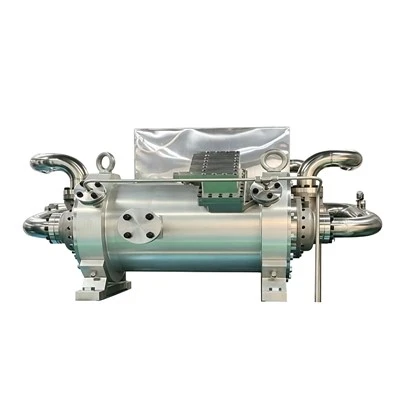
If you follow these steps, you’ll not only minimize damage during an ESD, but also reduce your downtime by 40% on average, according to our customer data. But here’s the thing: no one is an expert on this alone. As a turbo expander supplier, we don’t just sell equipment—we provide support during every step, from pre-installation training to emergency on-site service. If you’re dealing with recurring ESDs, or want to set up a proactive maintenance plan to prevent them, don’t hesitate to reach out to our team for a customized assessment. We’ll send a technician to your site to inspect your unit, review your operating logs, and help you create a plan that fits your specific process.
Filling Pump References:
- API Standard 617, Centrifugal Compressors and Turboexpanders for Petroleum, Chemical, and Gas Industry Services, 8th Edition, 2020
- Turboexpander Operation and Maintenance Guidelines, American Society of Mechanical Engineers (ASME) PTC 10, 2017
- Field Experience with Turboexpander Emergency Shutdowns, International Association of Oil & Gas Producers (IOGP) Report No. 489, 2019
Hangzhou Turbo Energy Technology Co., Ltd.
As one of the most professional turbo expander manufacturers and suppliers in China, we’re featured by quality products and good price. Please rest assured to buy advanced turbo expander made in China here from our factory. We also accept customized orders.
Address: C712, Block C, Westlake International Science and Technology Building, Huaxing Branch Road, Xihu District, Hangzhou, Zhejiang, China.
E-mail: sales@turboenergytech.com
WebSite: https://www.hangzhouturboenergy.com/
